A Four-Color Field, The Exploratorium
How can you use a
static artwork to create
an experience communicating the
CMYK printing process?
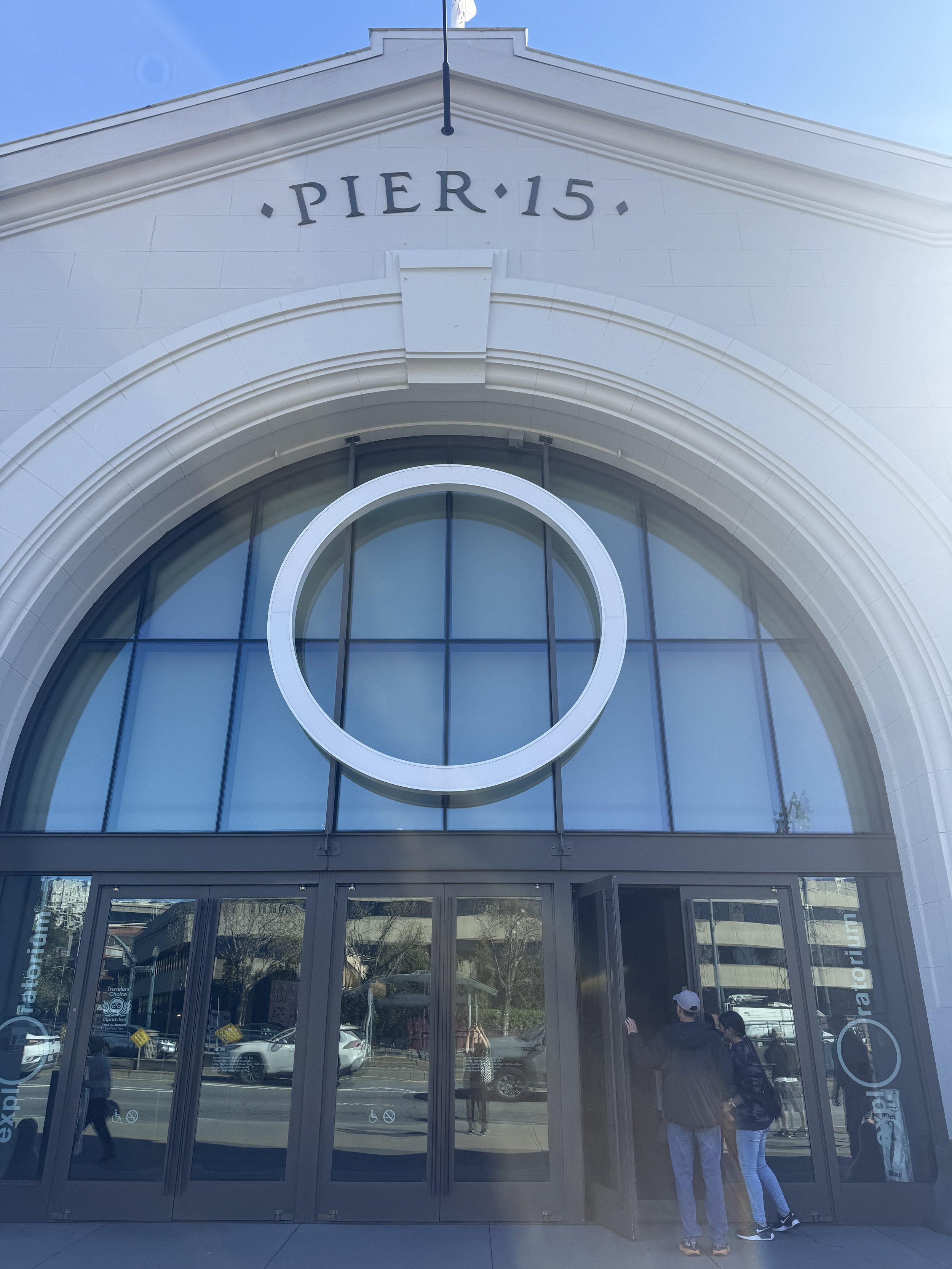
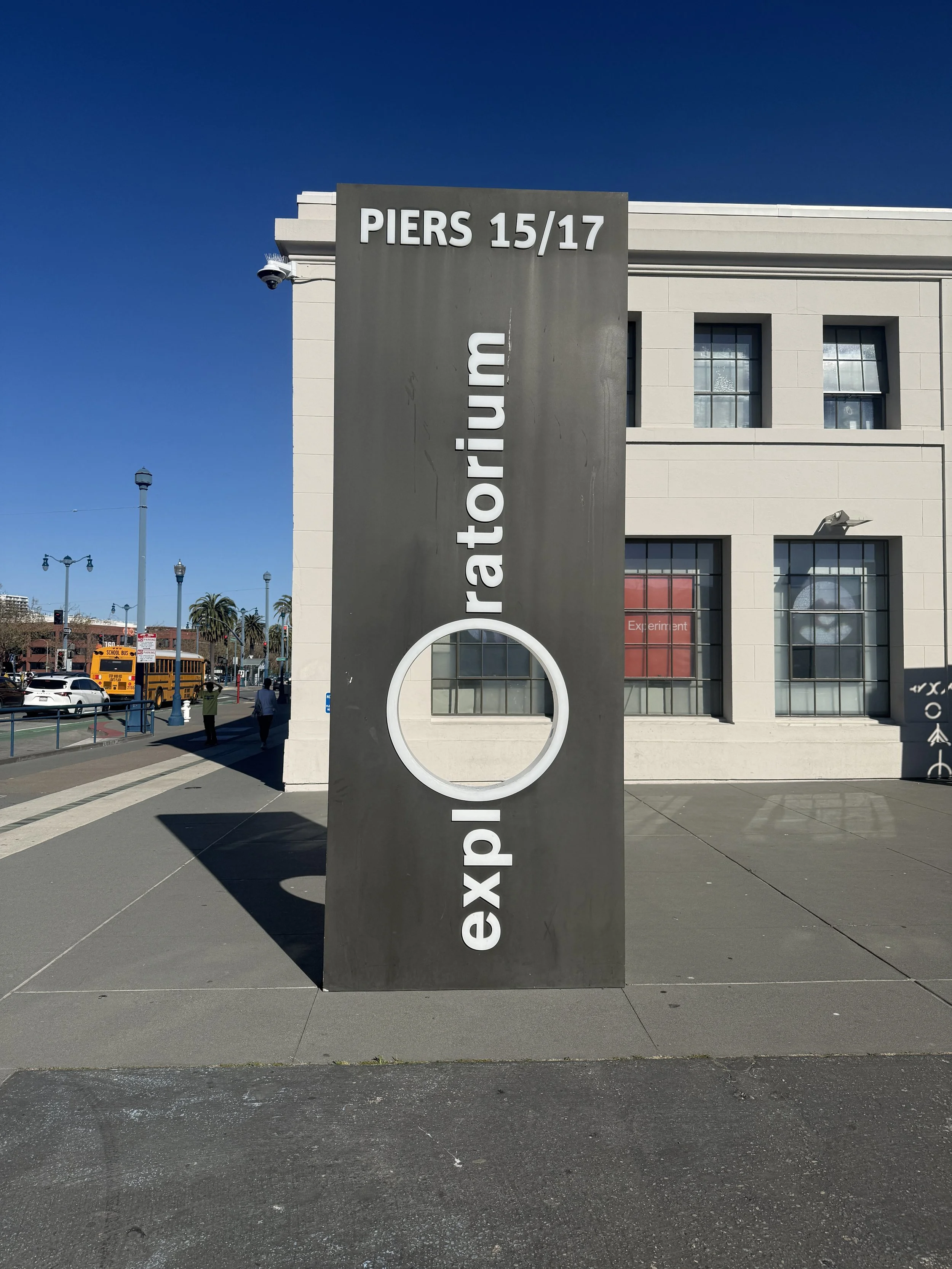
The Exploratorium is a hands-on museum exploring science, perception, and curiosity, based in San Francisco.
My proposal was selected for a mural commission that would complement the nearby ‘Color’ and ‘Seeing’ exhibits in the museum.
Given my print design background, I chose to focus my proposal on explain the CMYK printing process in a playful, experiential way for museum visitors of all ages.
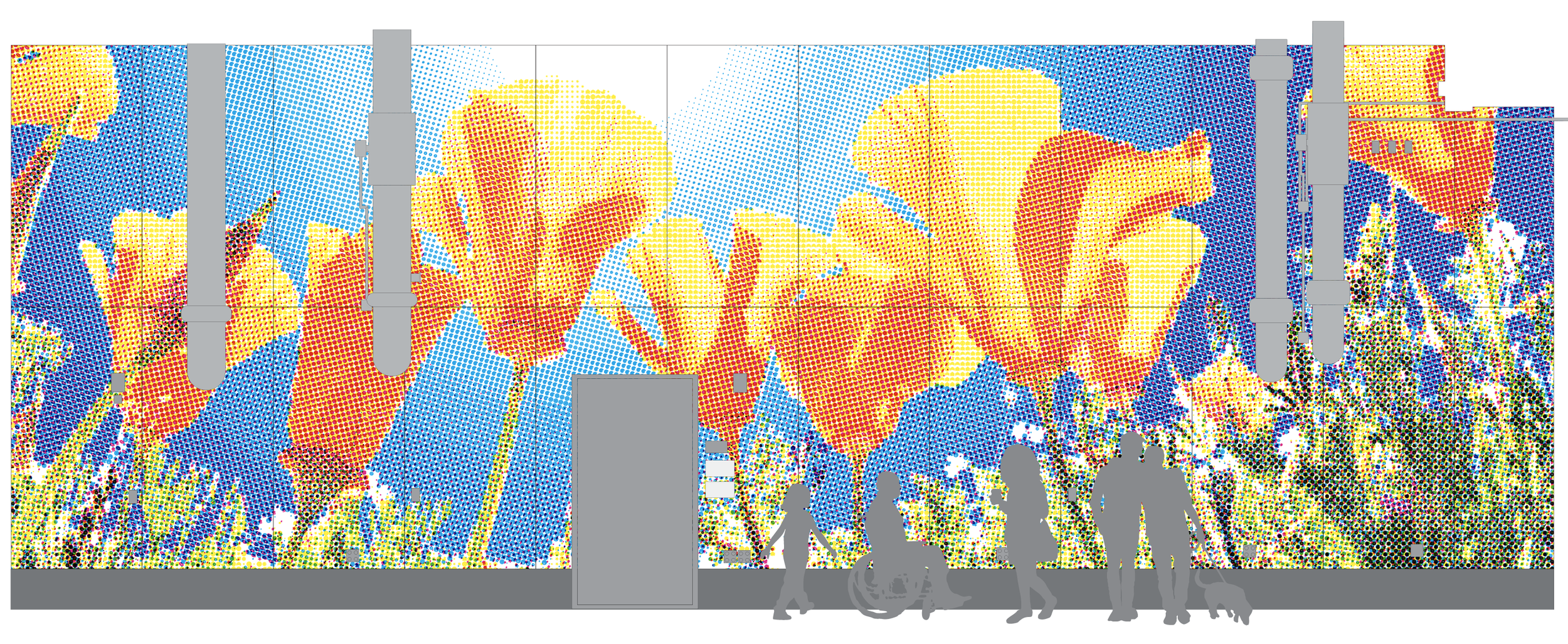
CMYK is a subtractive colour mixing process: four colours of pigments (Cyan, Magenta, Yellow, and Black (K)) absorb some wavelengths of light and reflect others. When layered together, thousands of dots blend into full-colour images.
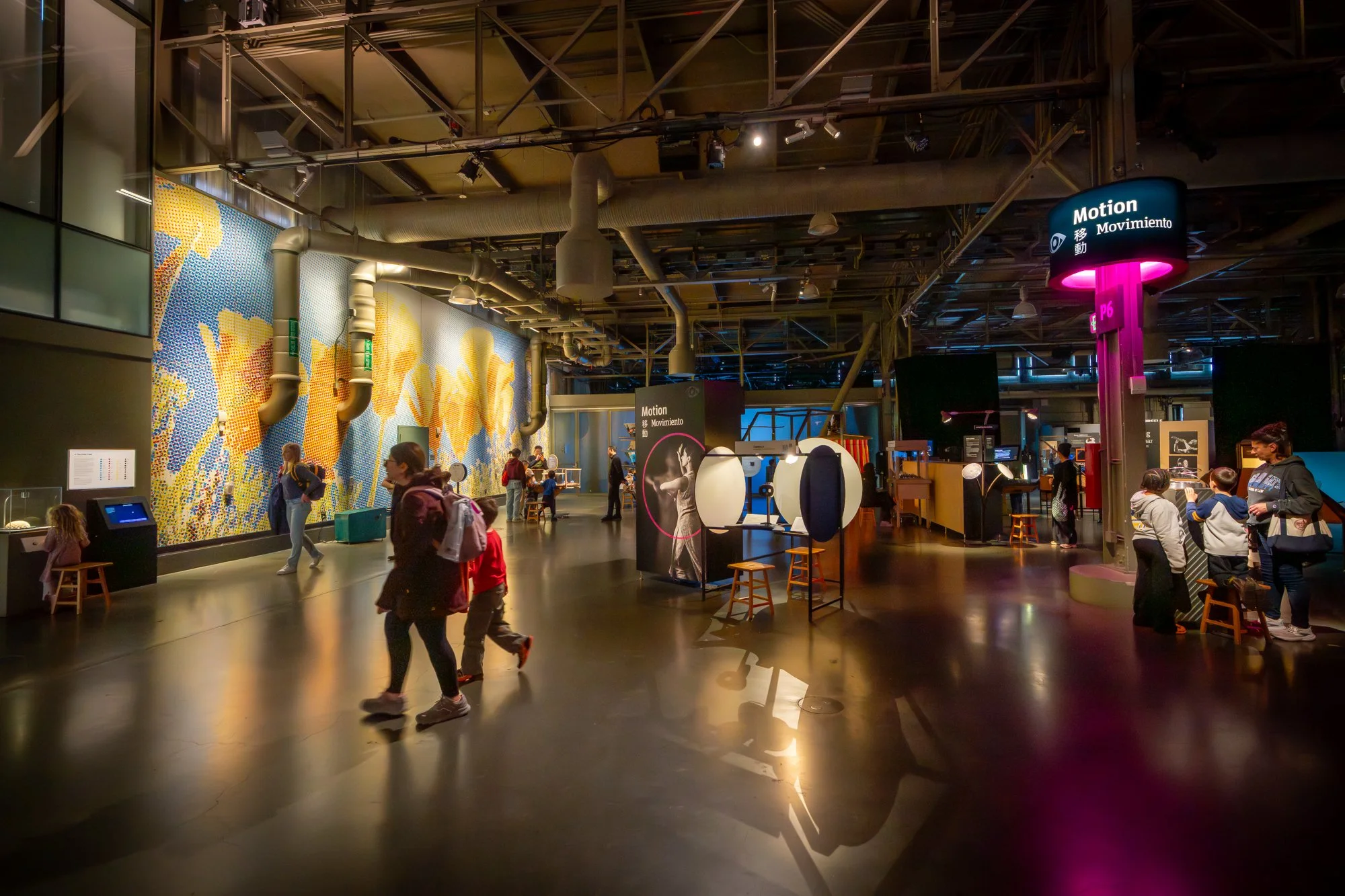
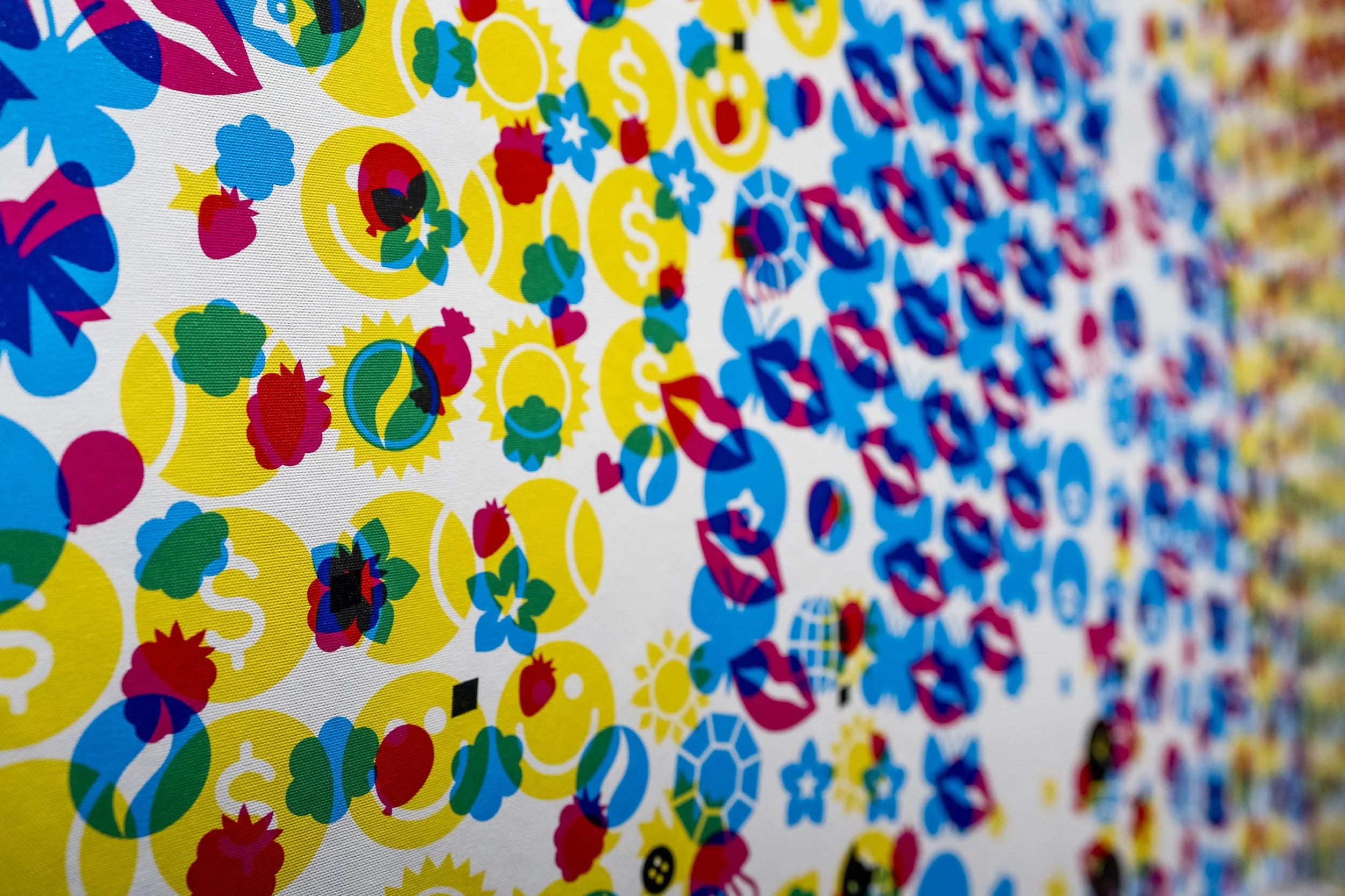
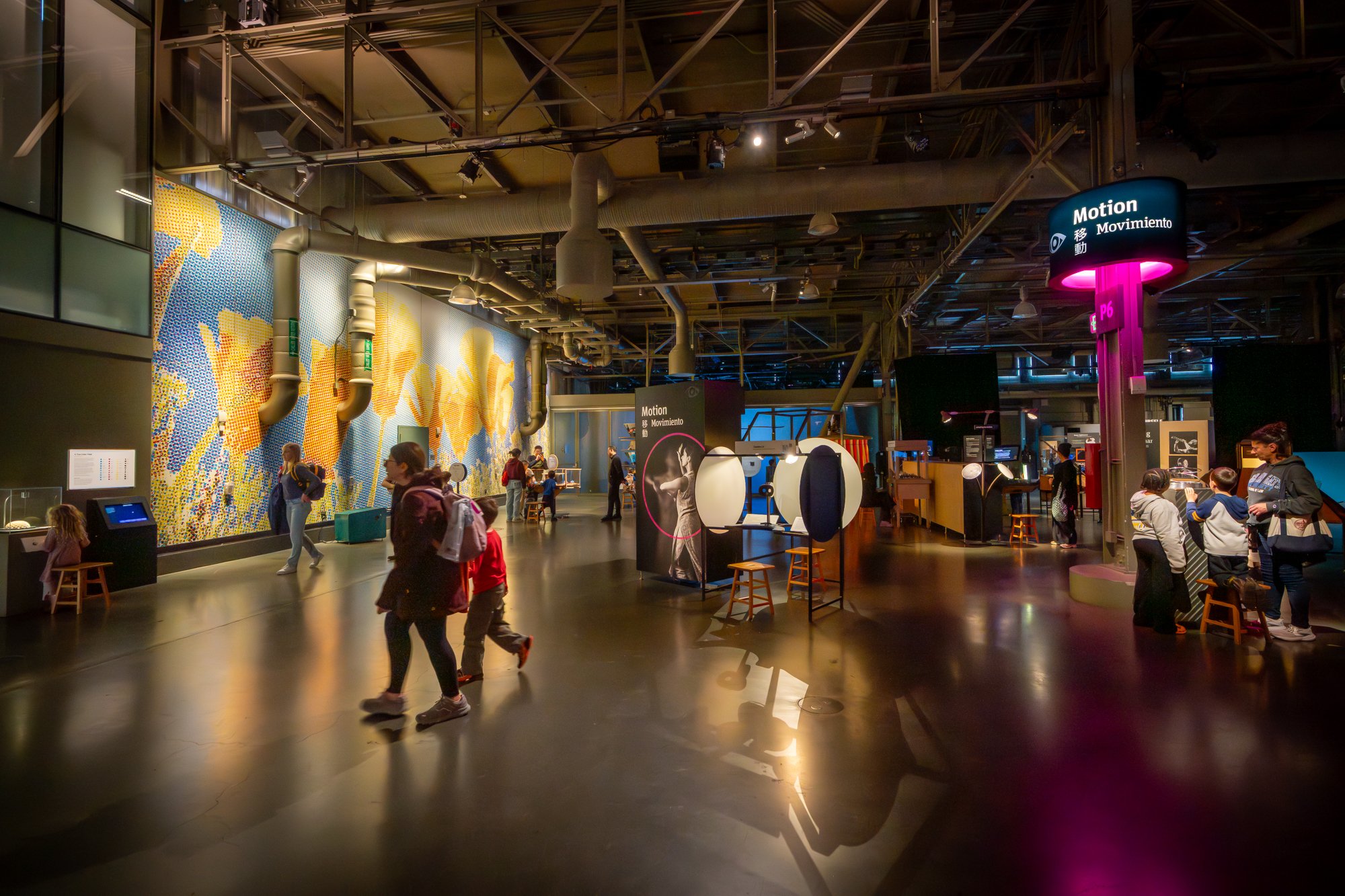
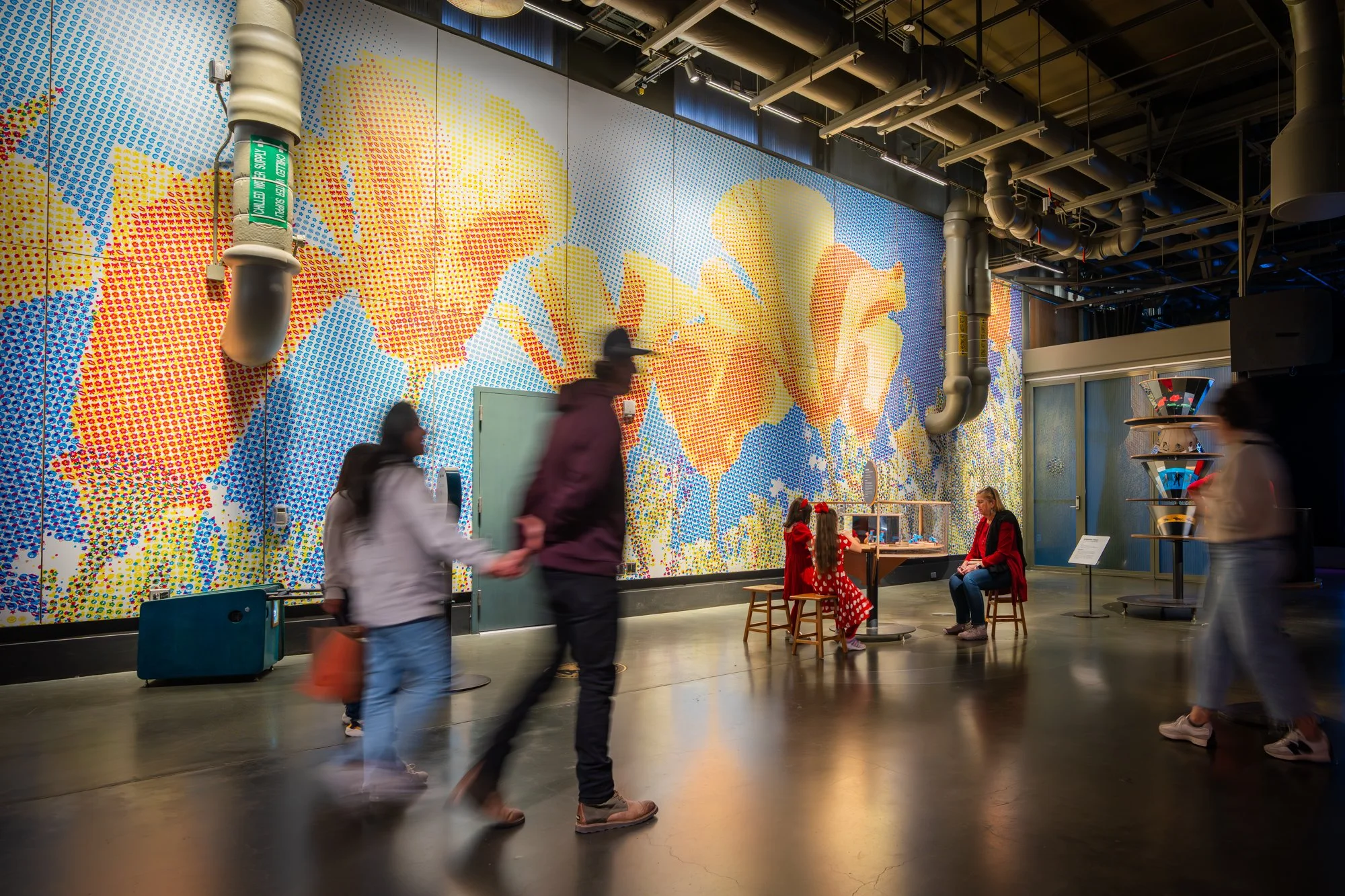
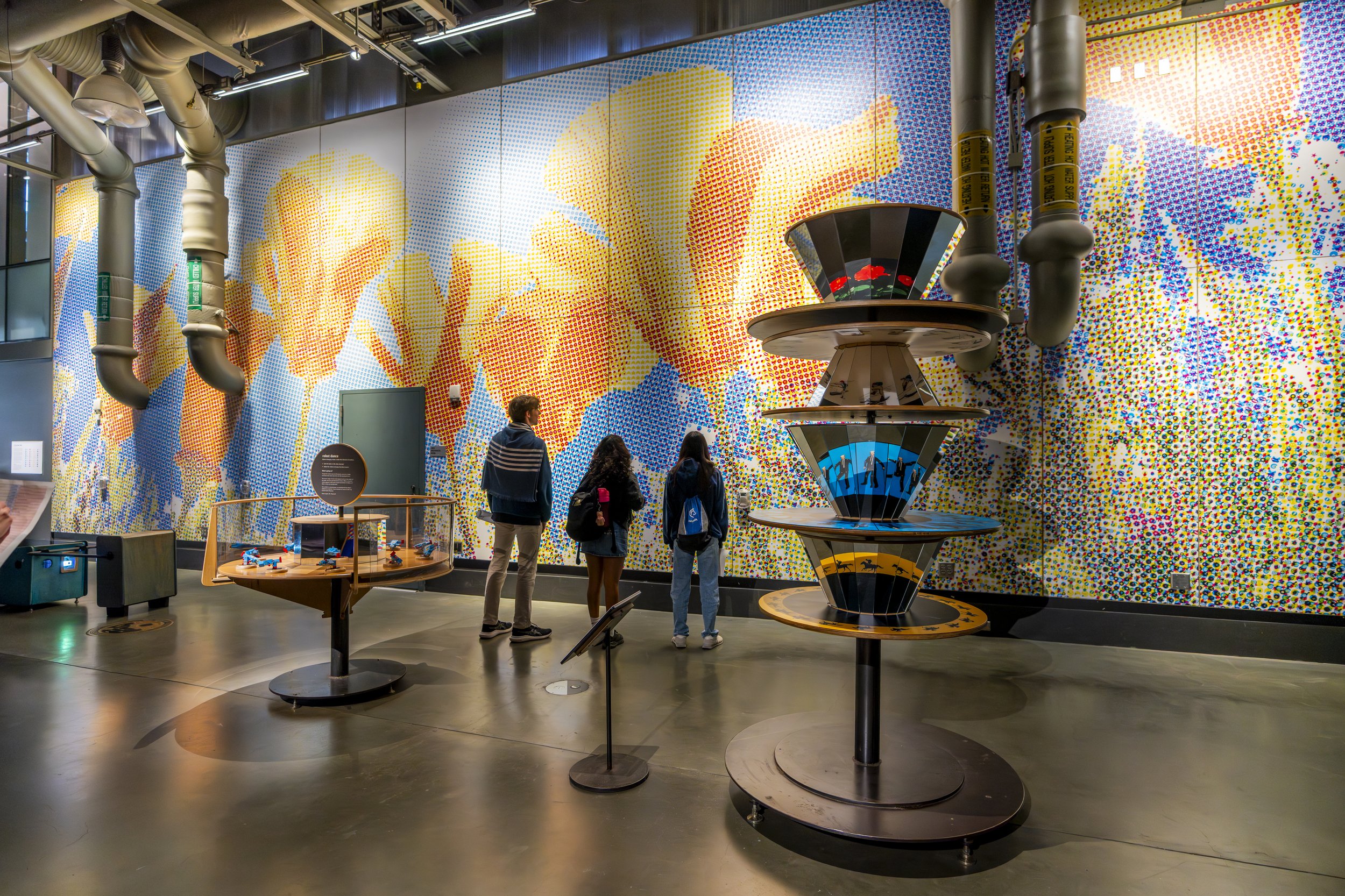
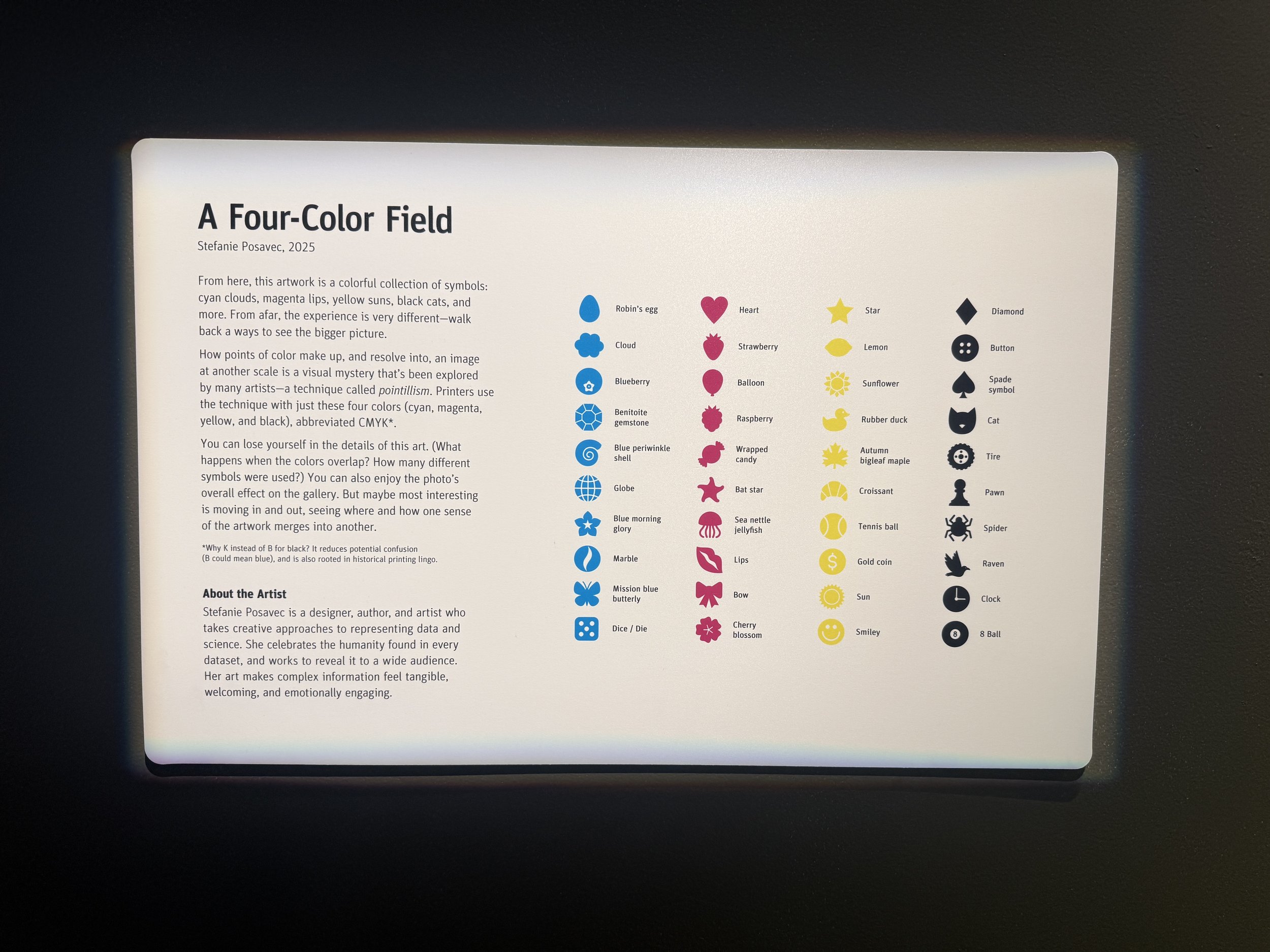
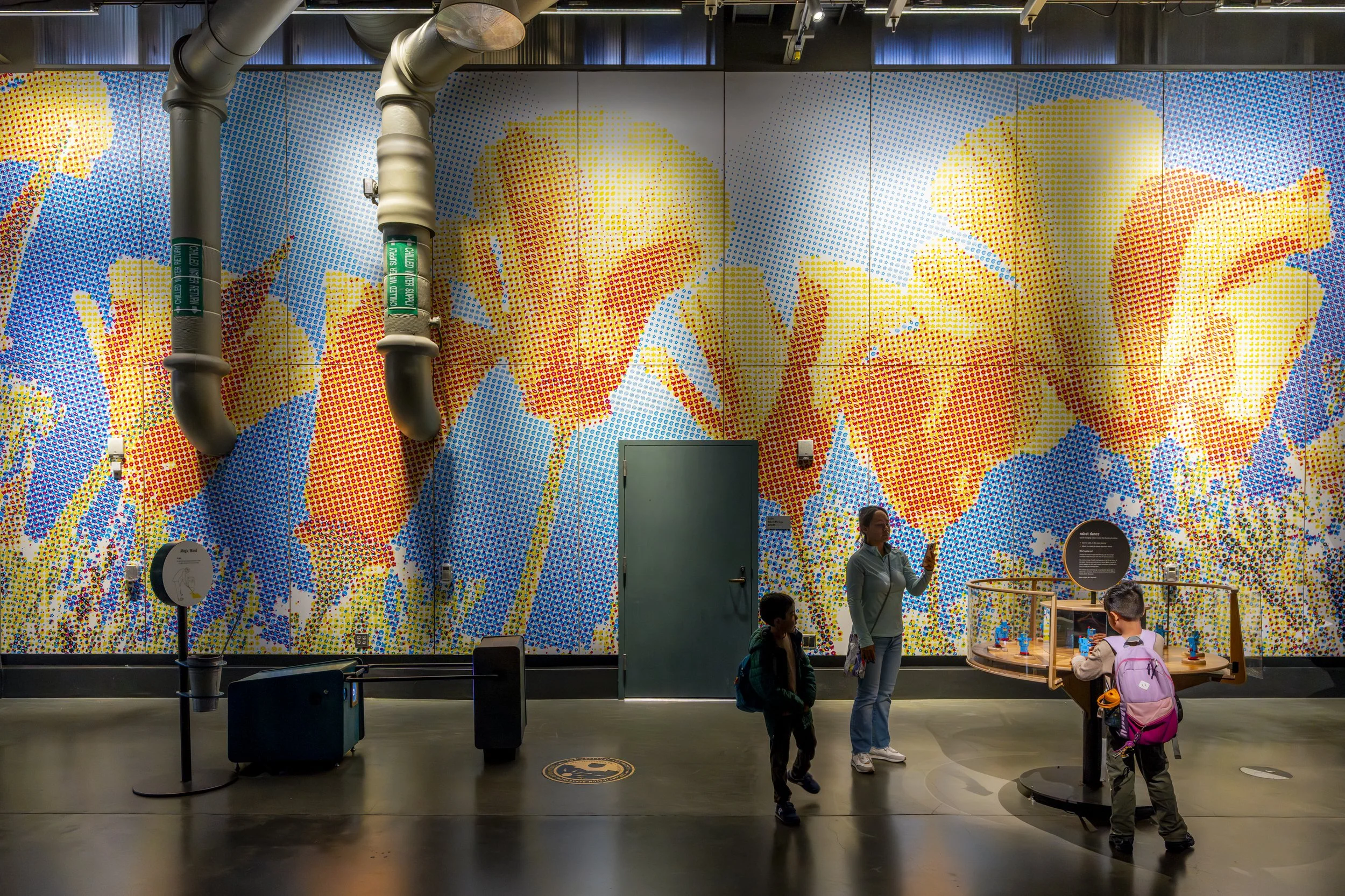
To explain this in a friendly way, I used code to generate a mural depicting California poppies where from across the gallery, you see a single photographic image, but up close, the image breaks down into thousands of cyan, magenta, yellow and black icons. Many of these icons were drawn from the flora and fauna of the San Francisco area.
The mural creates two different experiences of the same image: one large image you see from afar, and colourful detail and patterns you only discover when you get close.
What I like about this commission is that it’s a reminder you don’t need lots of screens or technology to create interactive experiences, and a static image can still invite curiosity and exploration.
Mural photos © The Exploratorium