Residency: Nesta
How can we visualise the parts of human experience that resist measurement?
During an artist residency at Nesta, the UK's innovation agency for social good, I explored this question through its A Fairer Start mission, which seeks to break the link between family background and life chances by improving children's early development.
As I explored the datasets underpinning the A Fairer Start mission, I realised I wasn't interested in answering the same questions as a data scientist. Instead, I felt the role of the artist was to ask different questions, ones that emerged where data became uncertain, subjective and difficult to measure. I became interested in the aspects of early childhood that resist measurement.
Developmental assessment frameworks such as England's Early Years Foundation Stage Profile provide valuable ways of assessing children's development, but they inevitably compress five years of messy, repetitive, deeply human experience into a one-word assessment. I wanted to explore what this compression of data left behind.
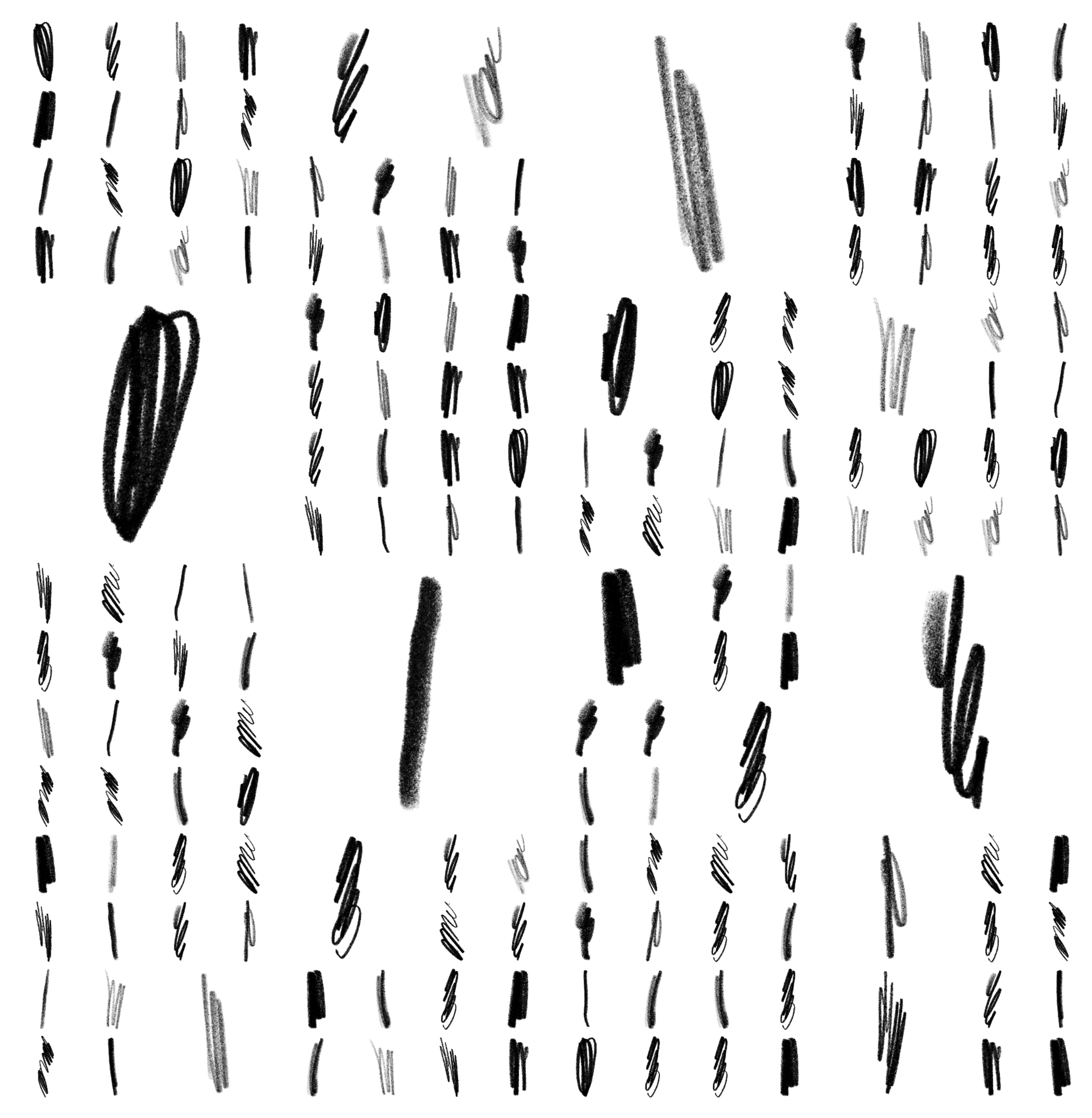
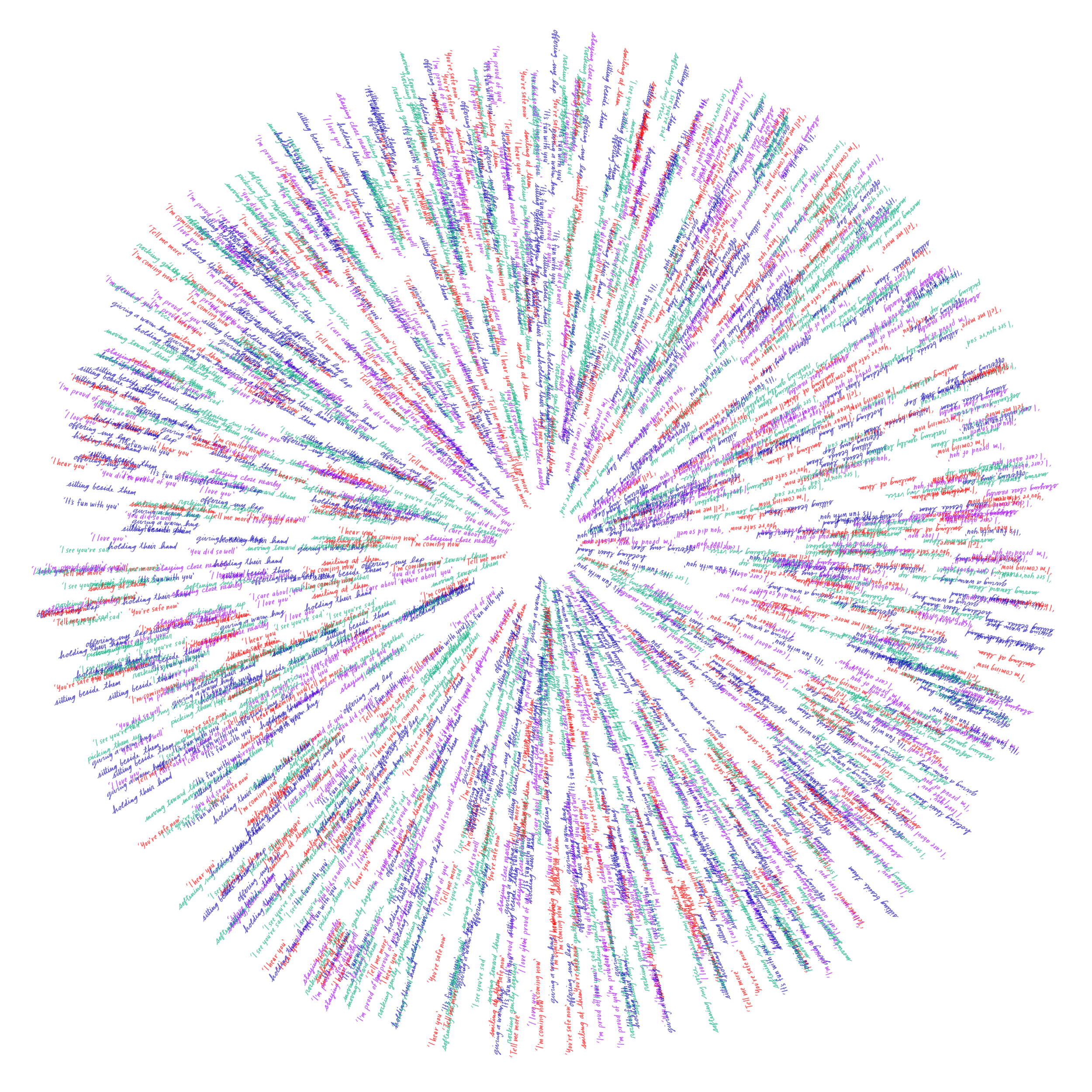
Drawing on developmental research, policy documents, longitudinal cohort studies, conversations with researchers and Nesta's parenting research, I synthesised this evidence into a framework describing the everyday work of both children and caregivers. I then constructed a new qualitative dataset of poetic data: the gestures, routines, conversations and everyday acts of care that shape early childhood but rarely appear in conventional datasets. I wrote more than 800 short phrases describing these moments and invited parents, teachers and school communities to handwrite them.
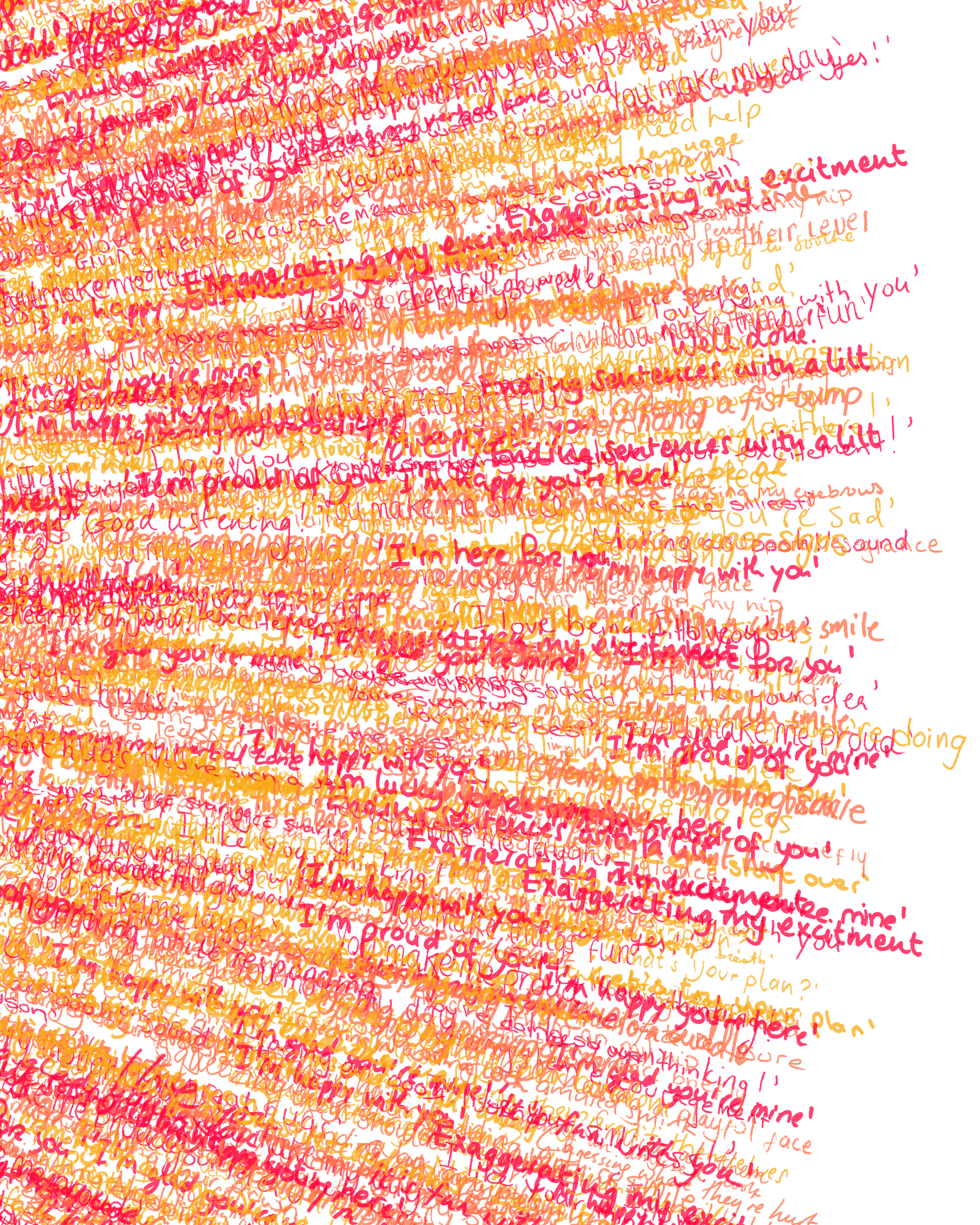
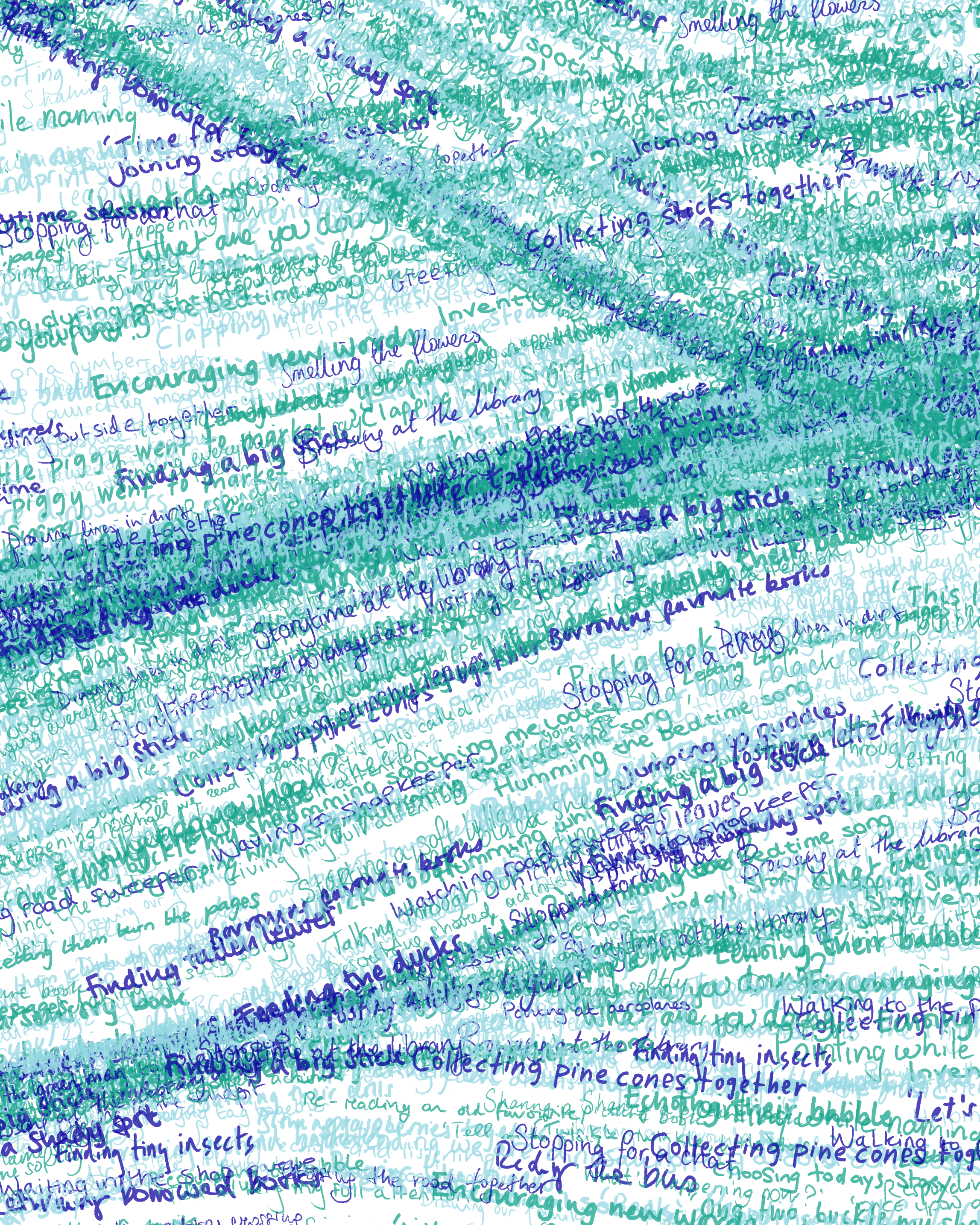
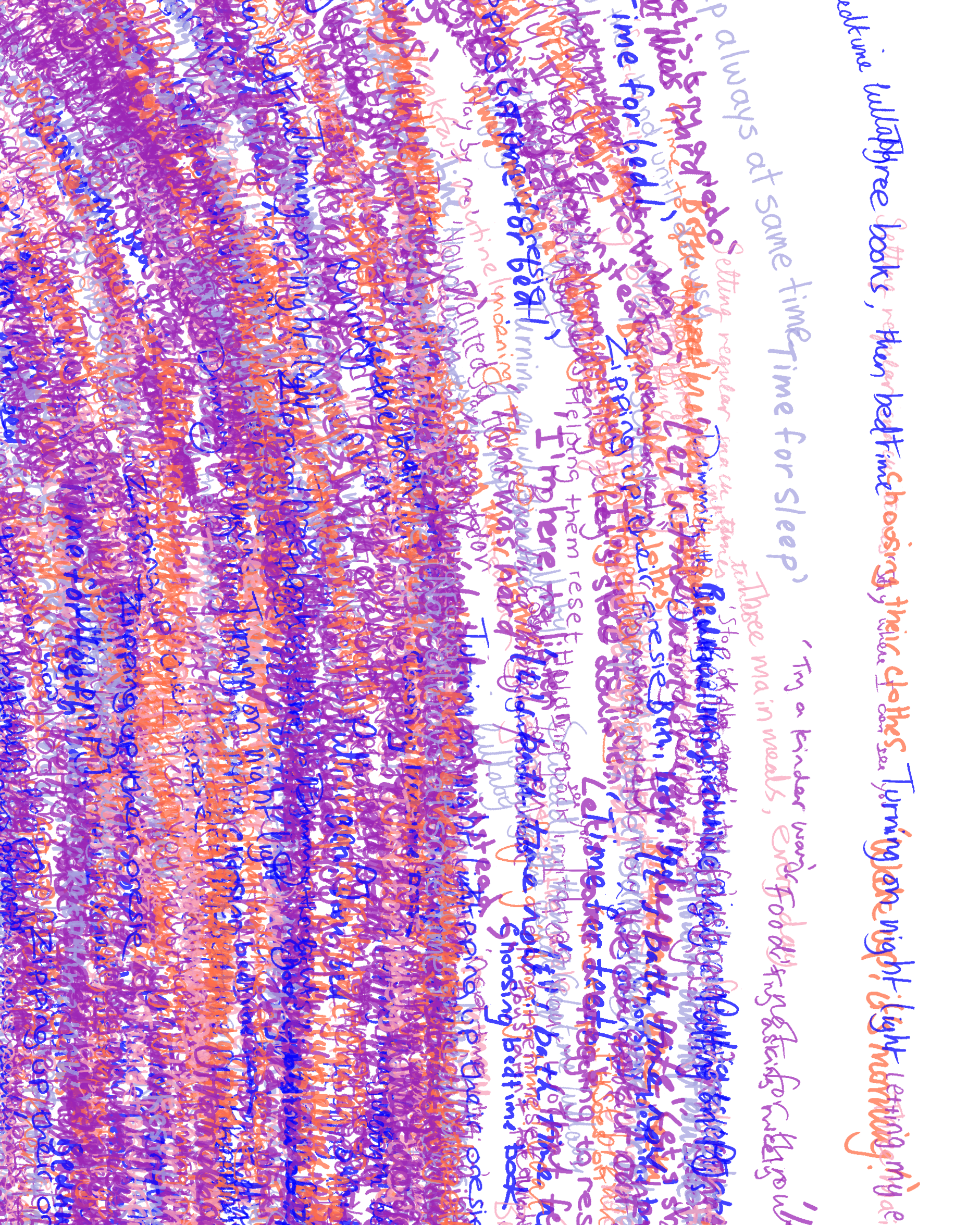
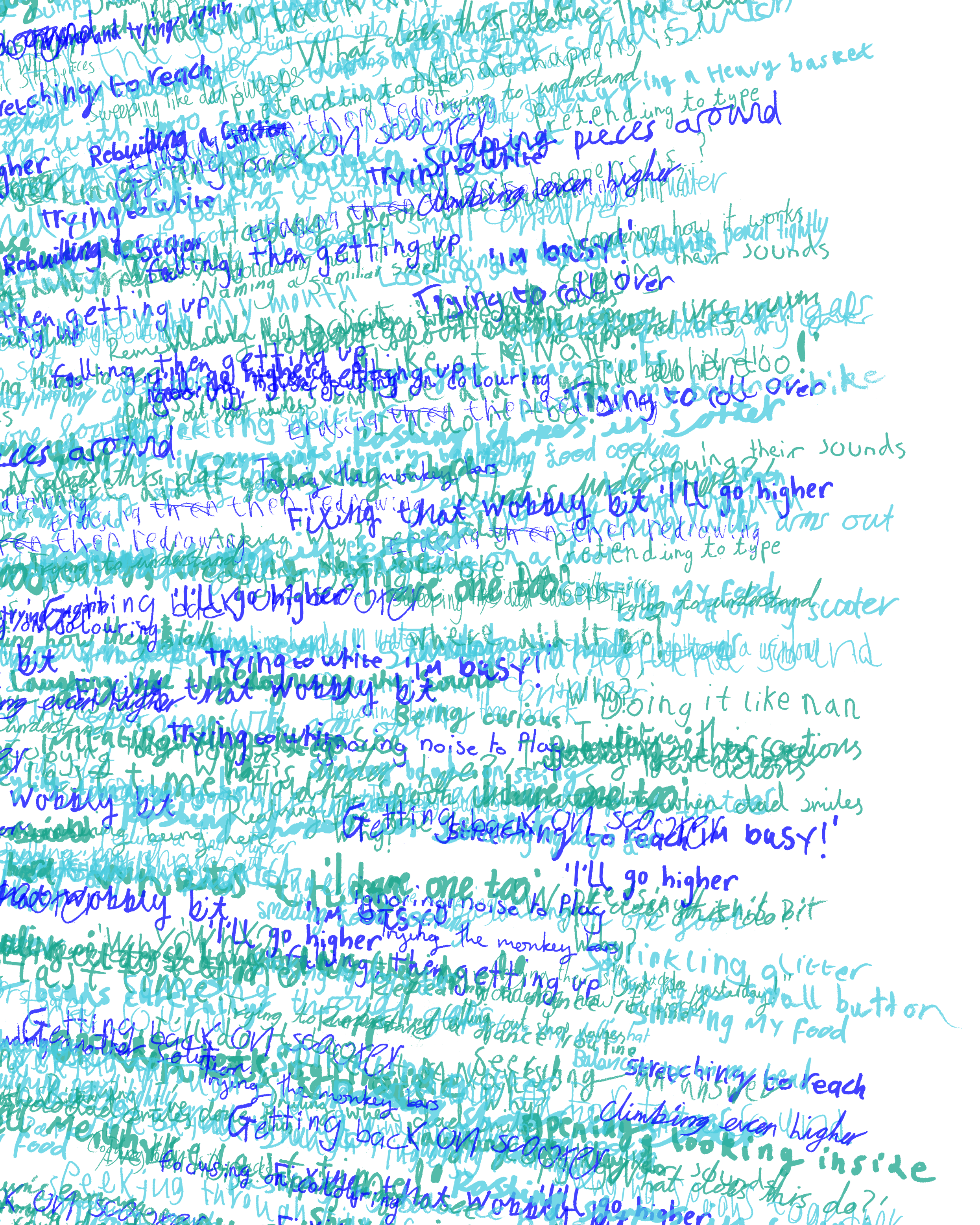
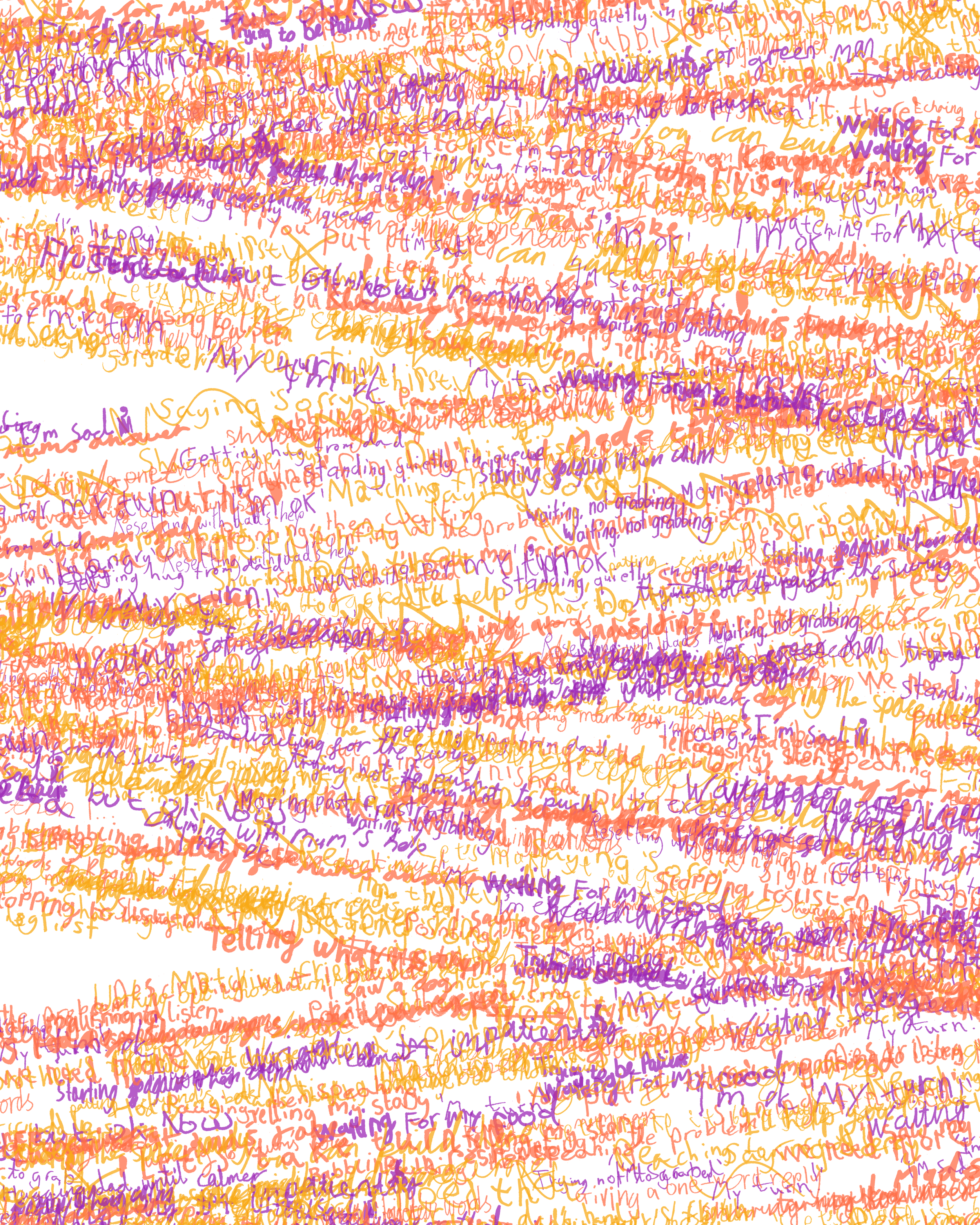
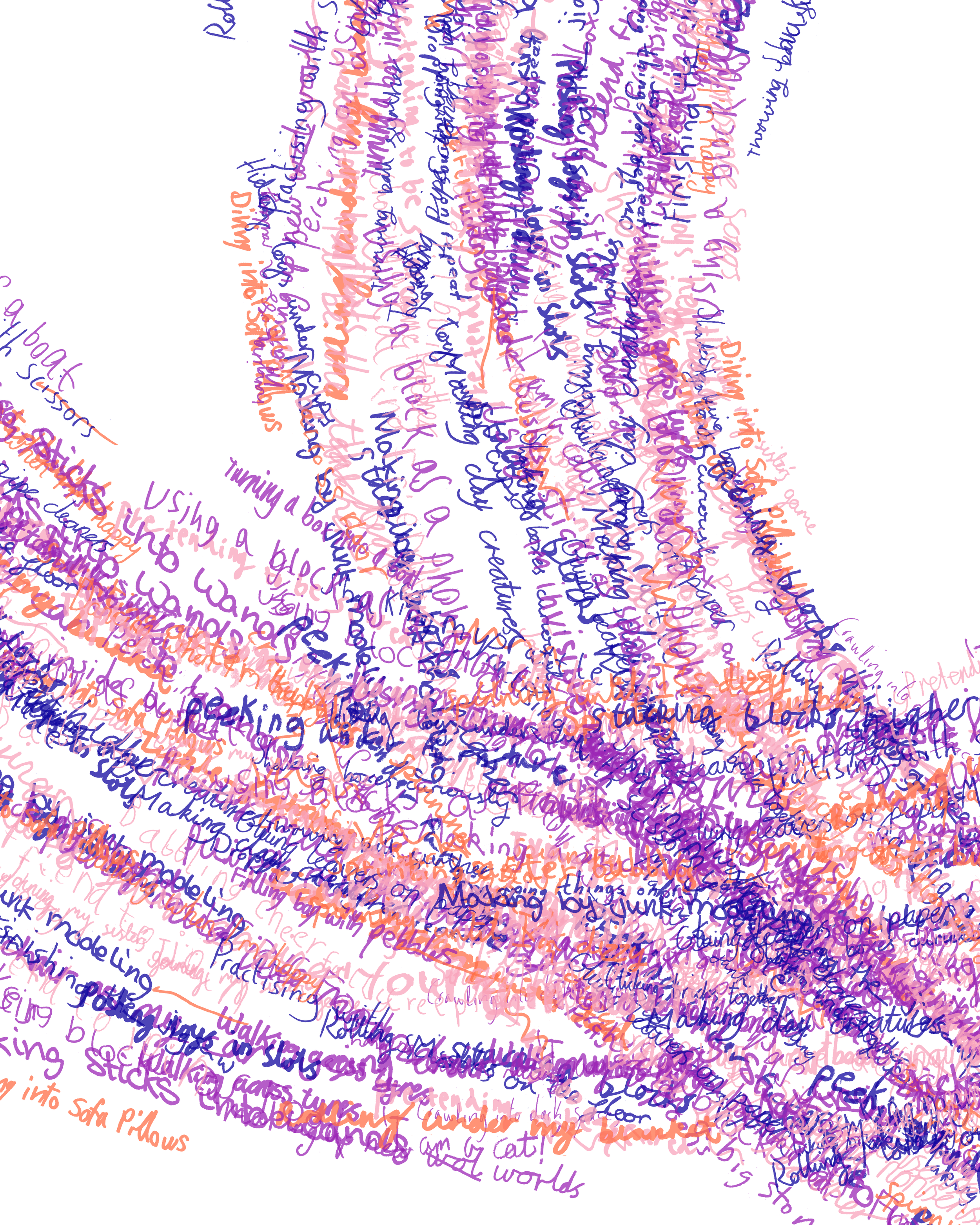
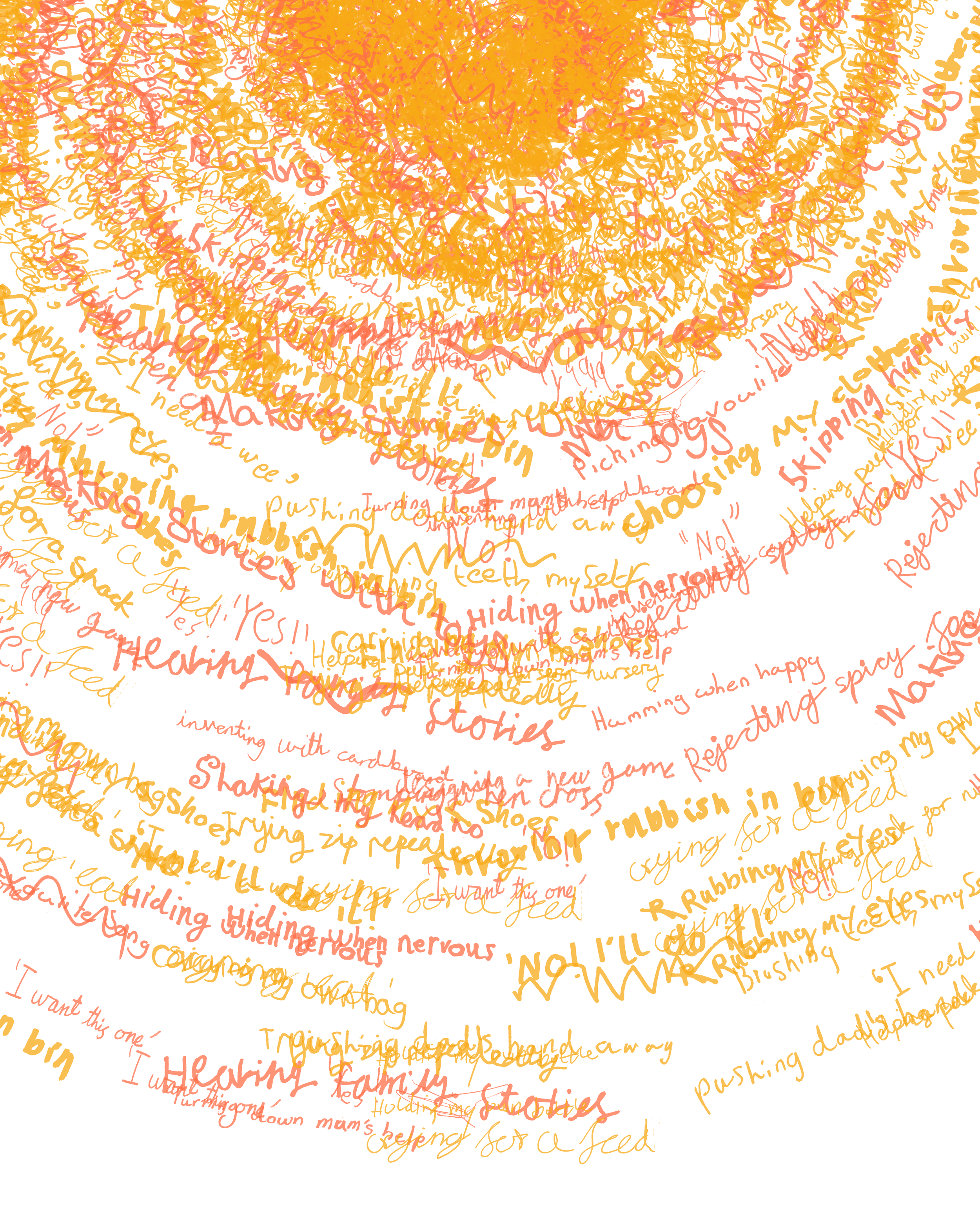
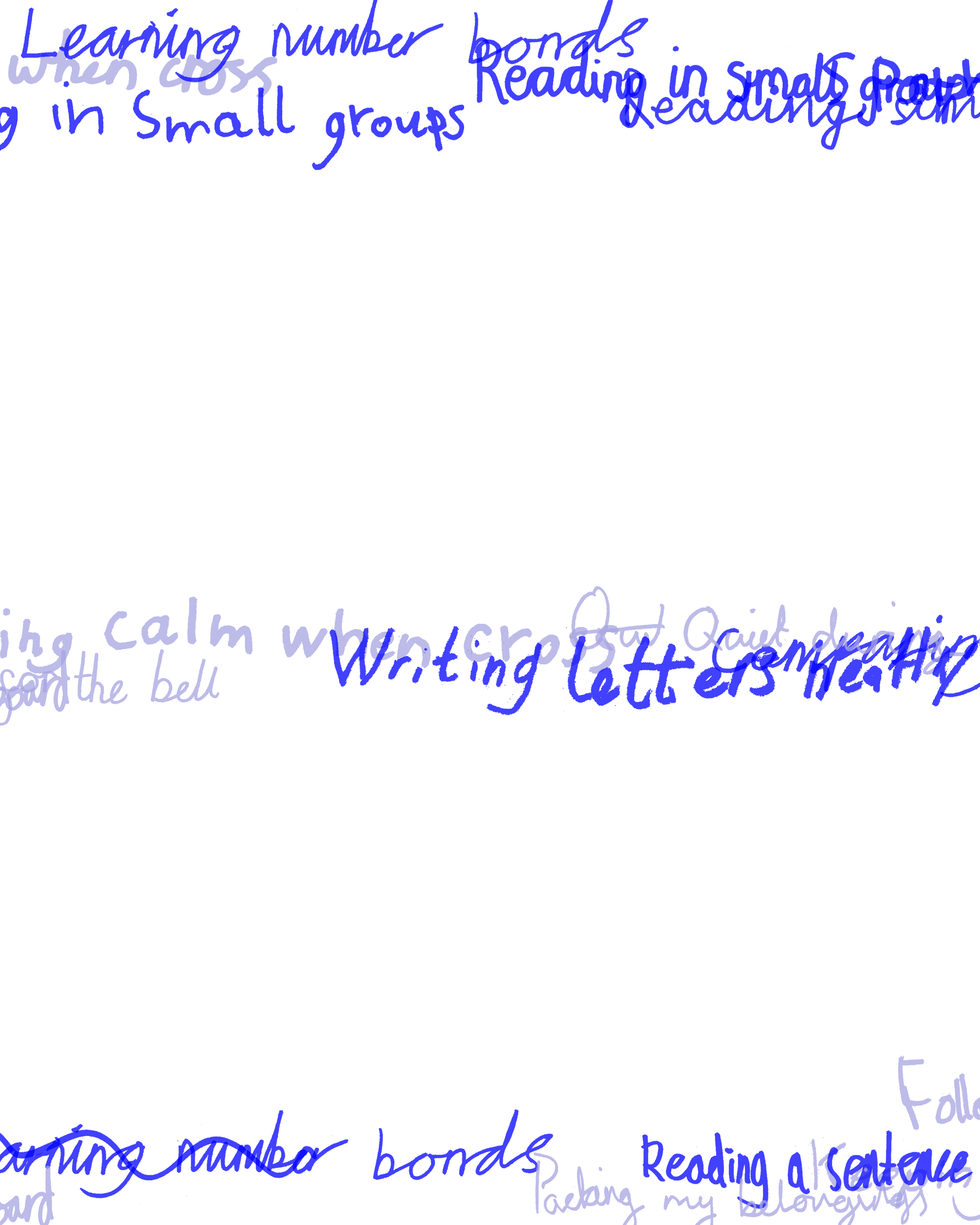
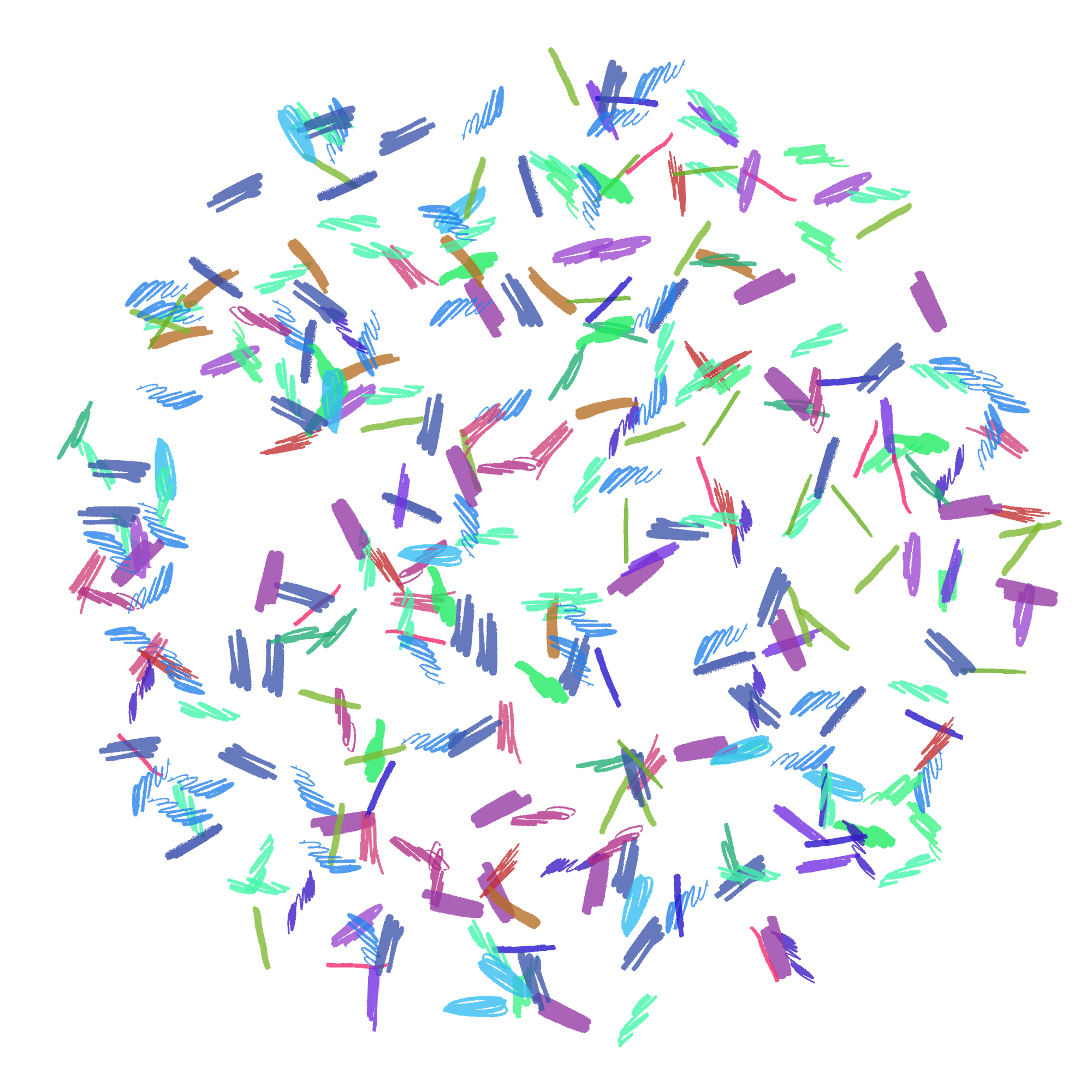
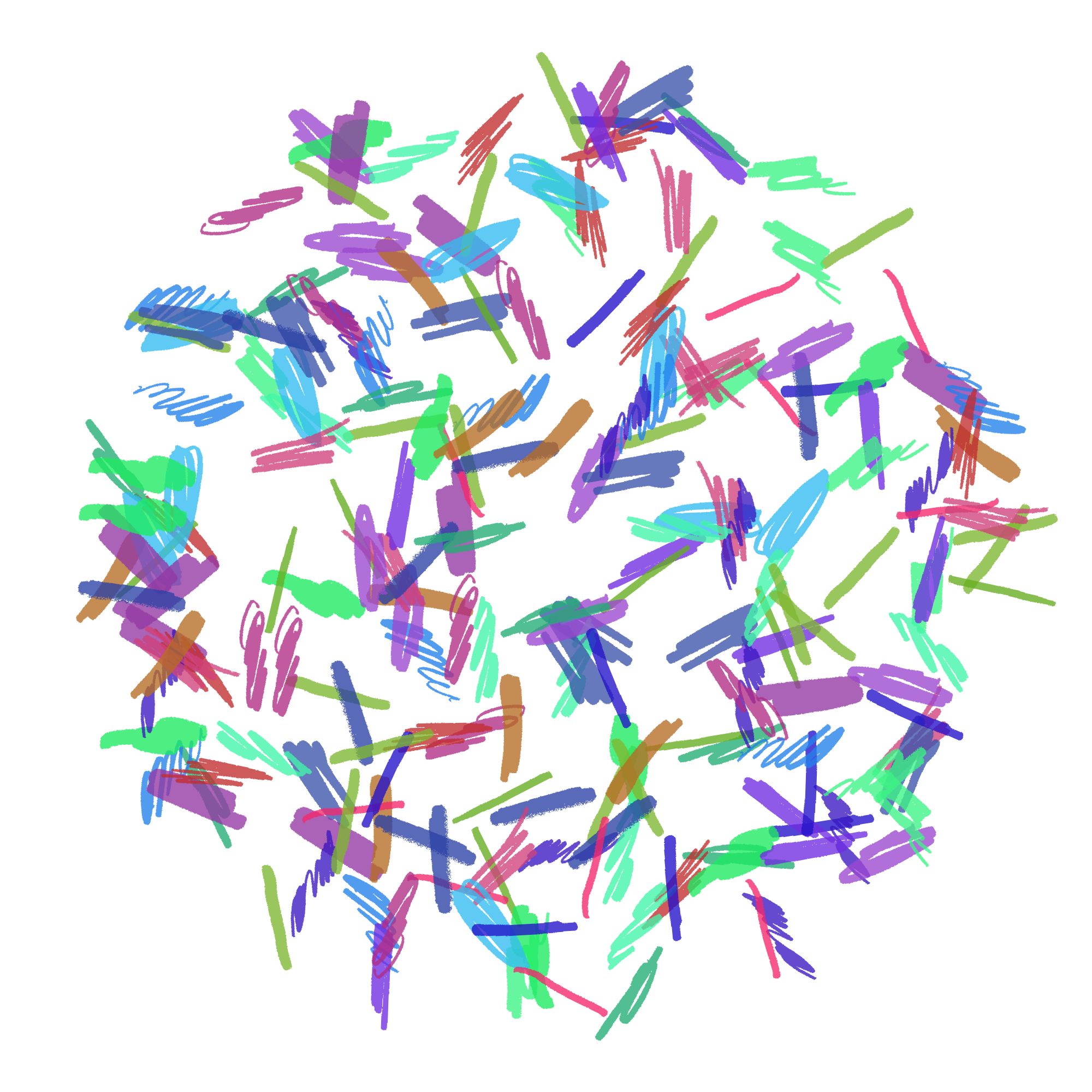
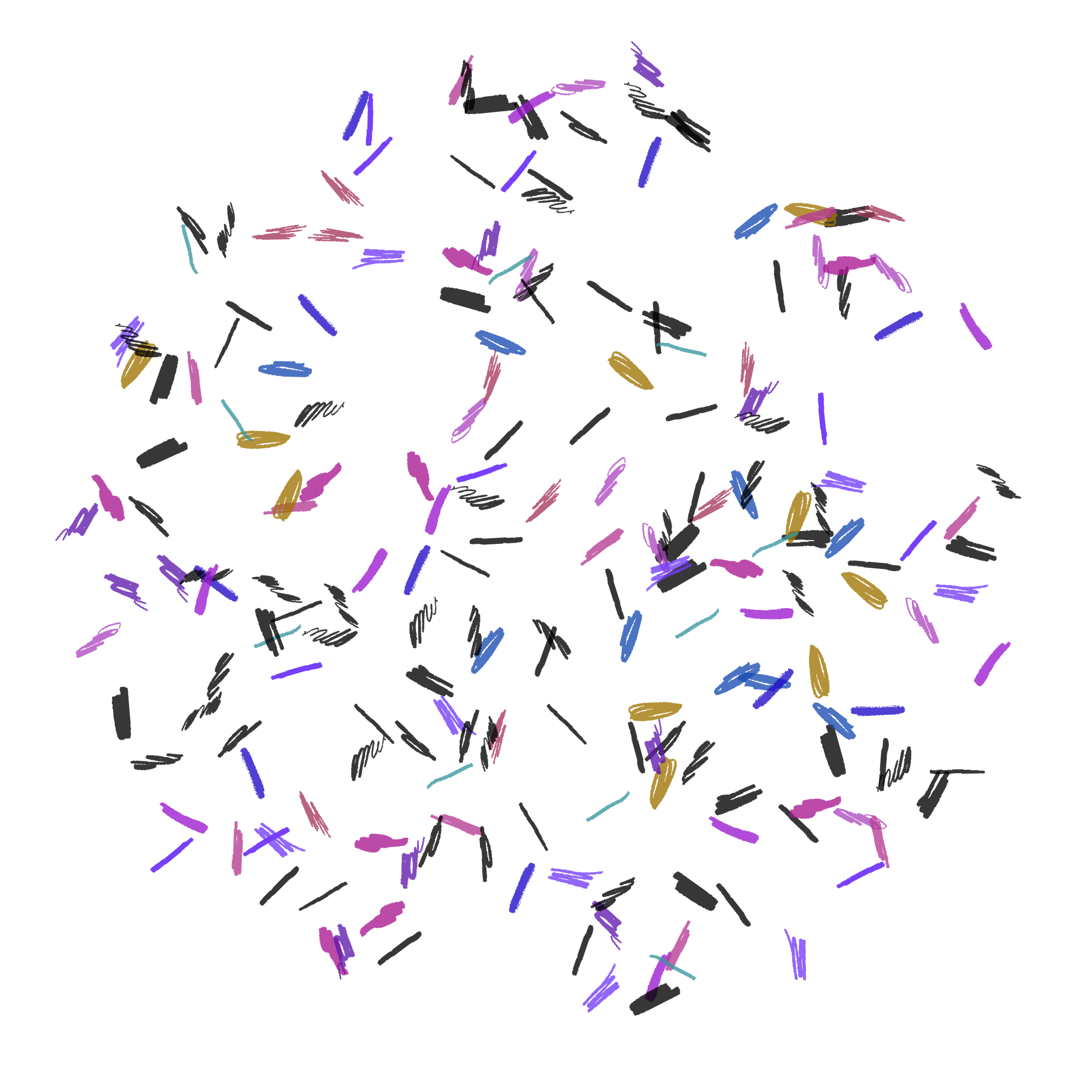
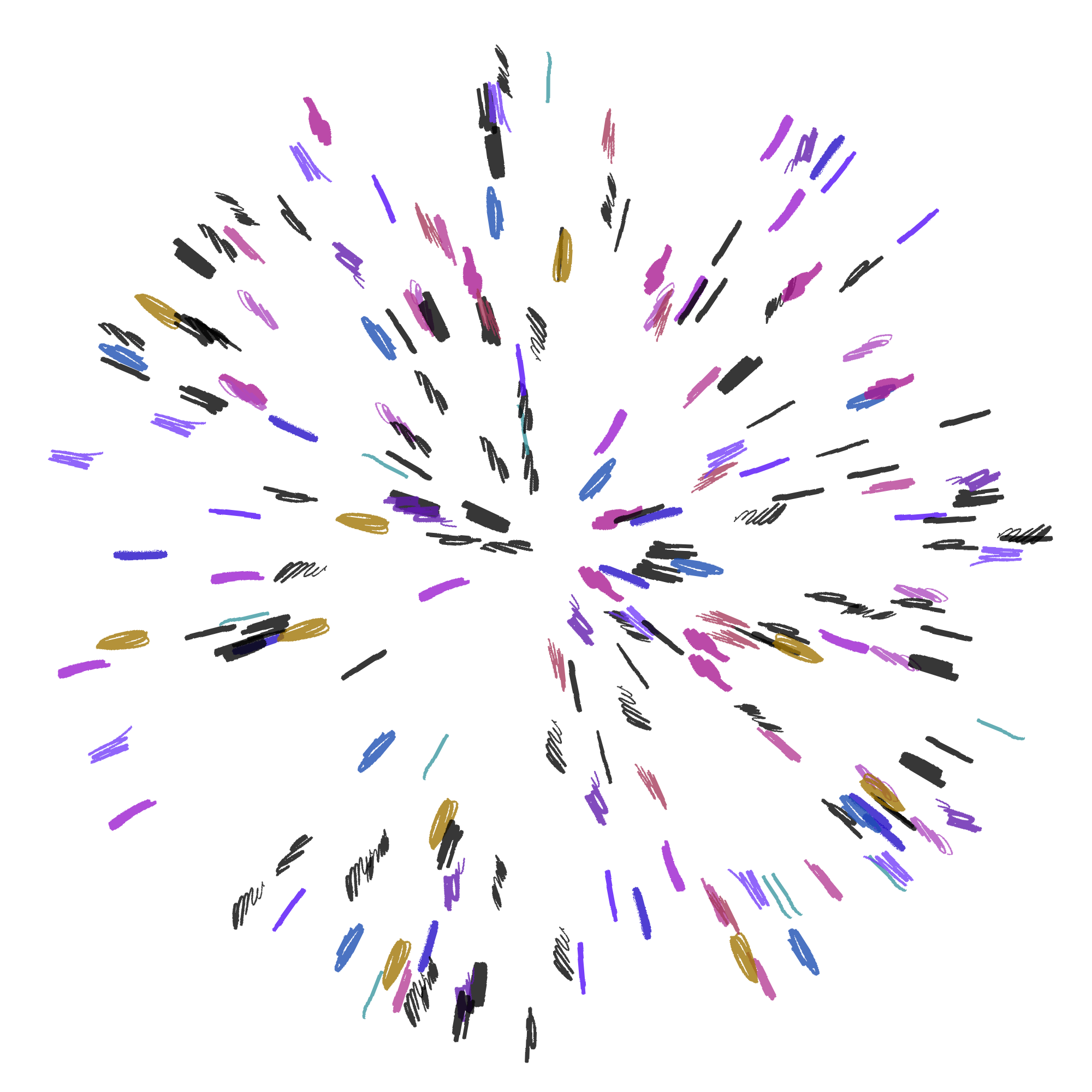
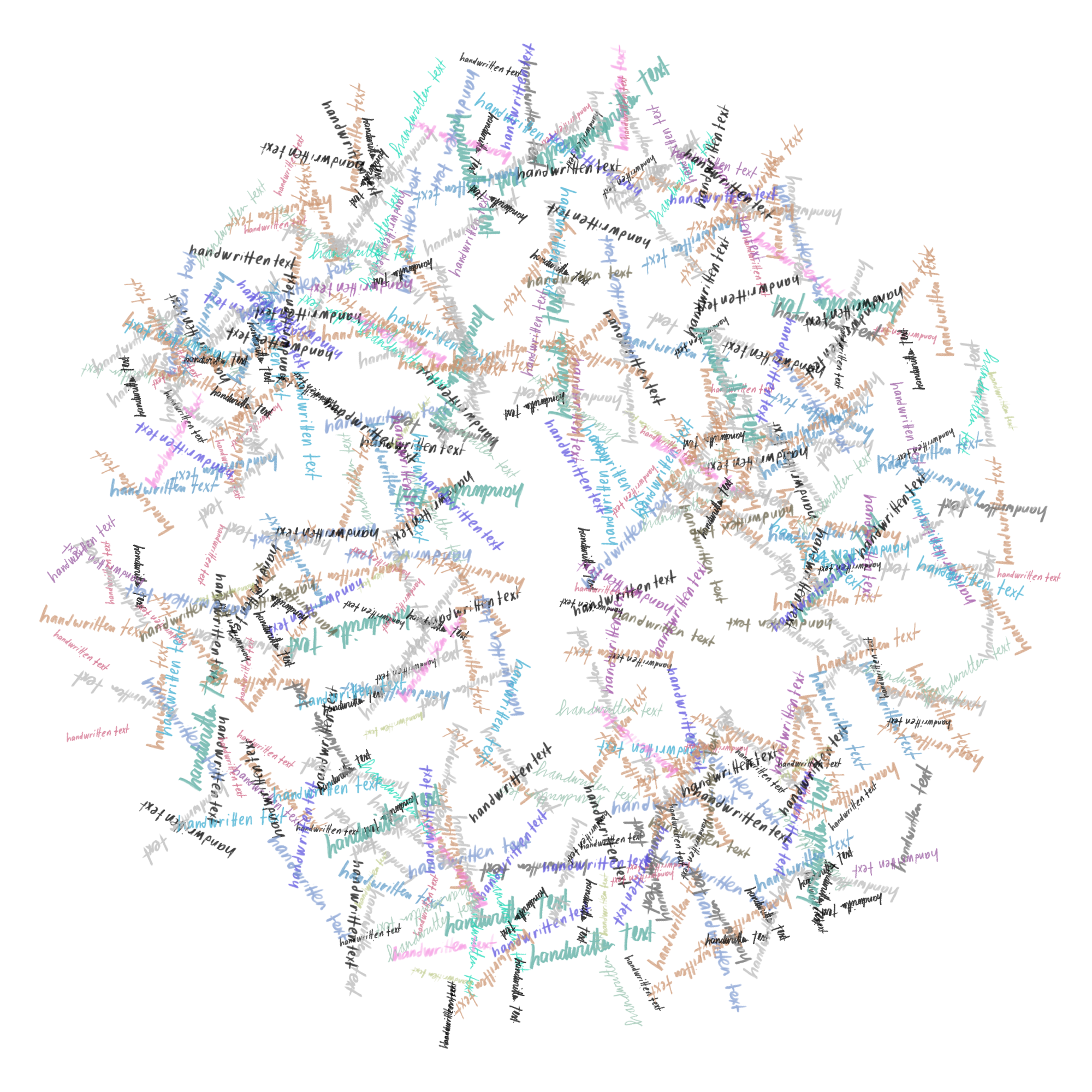
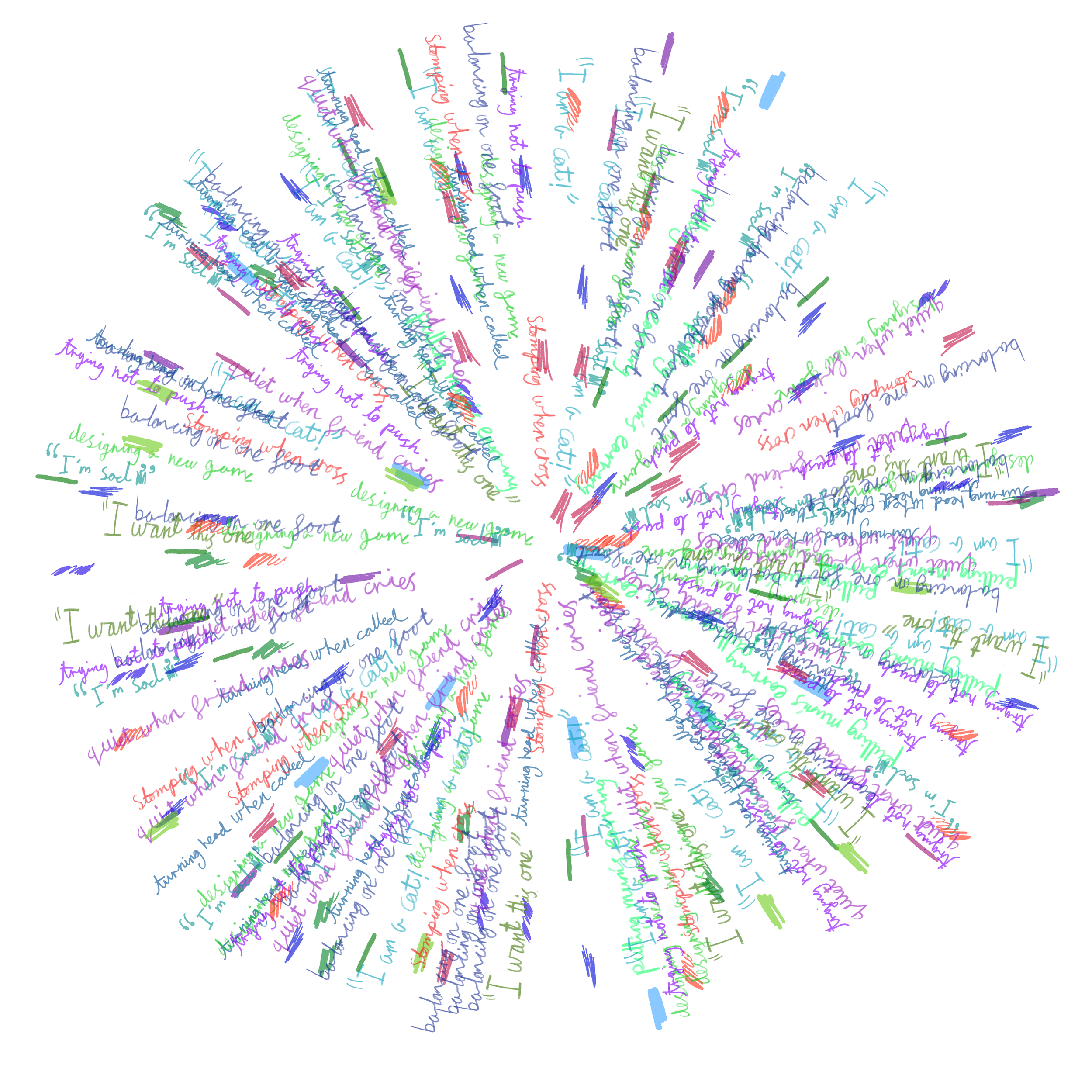
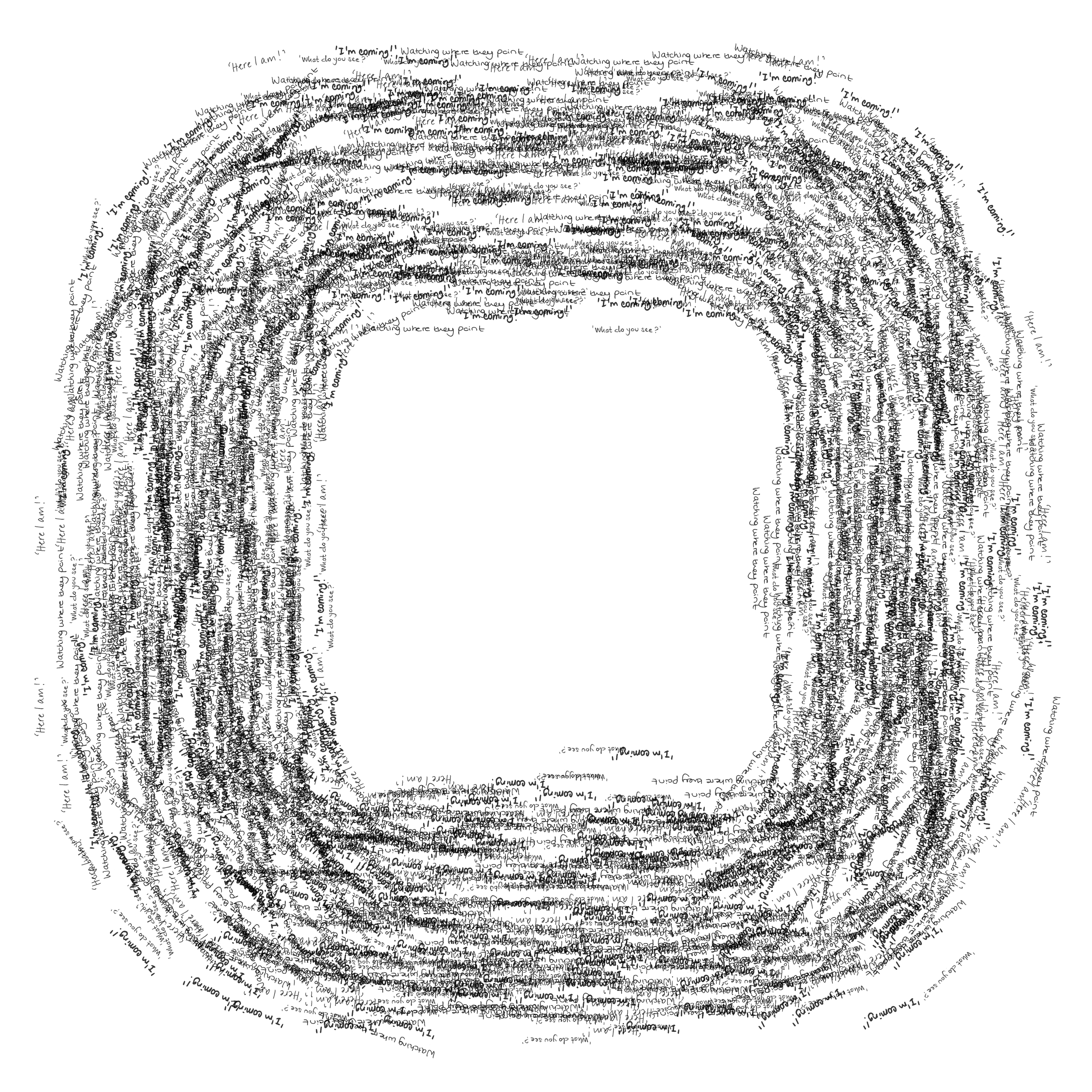
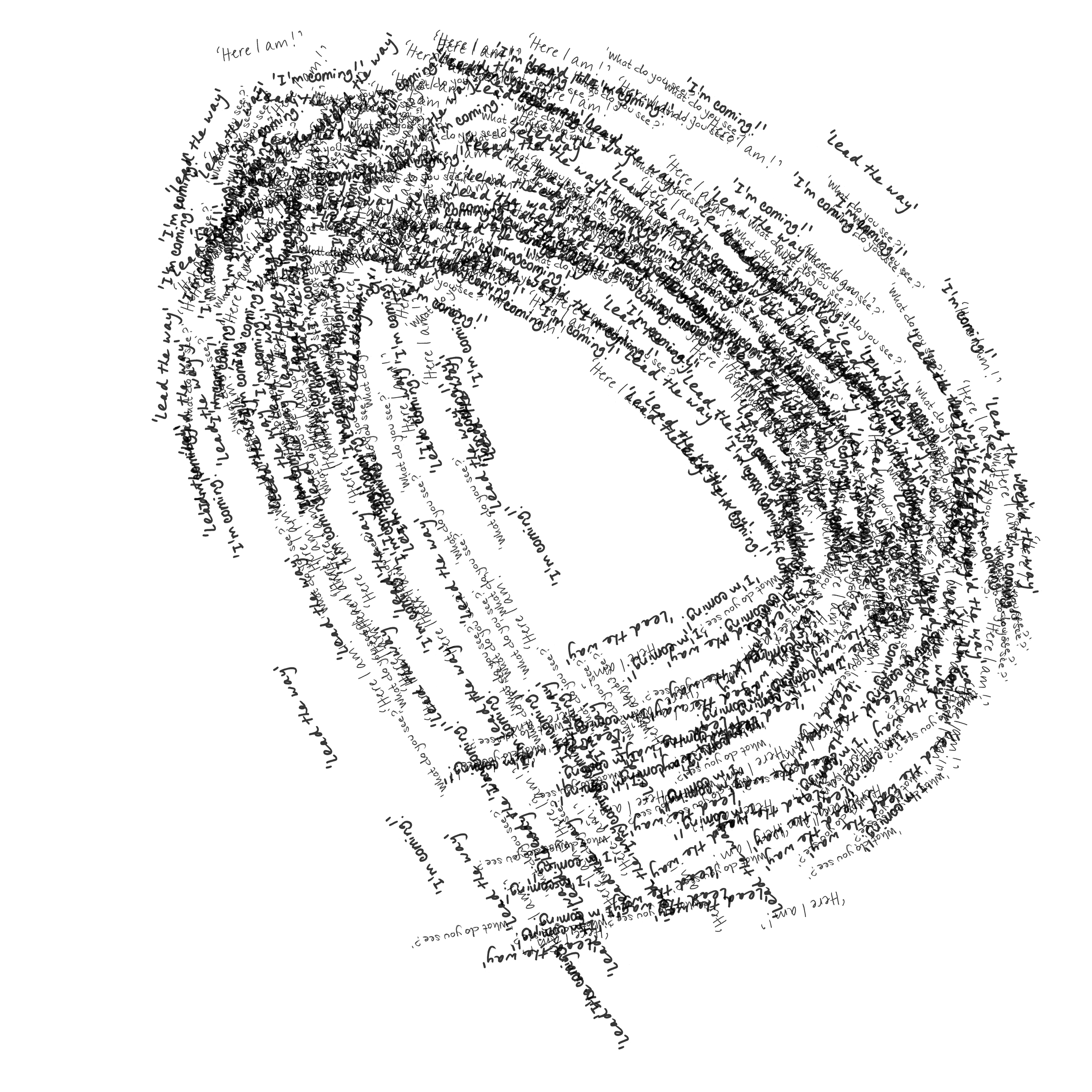
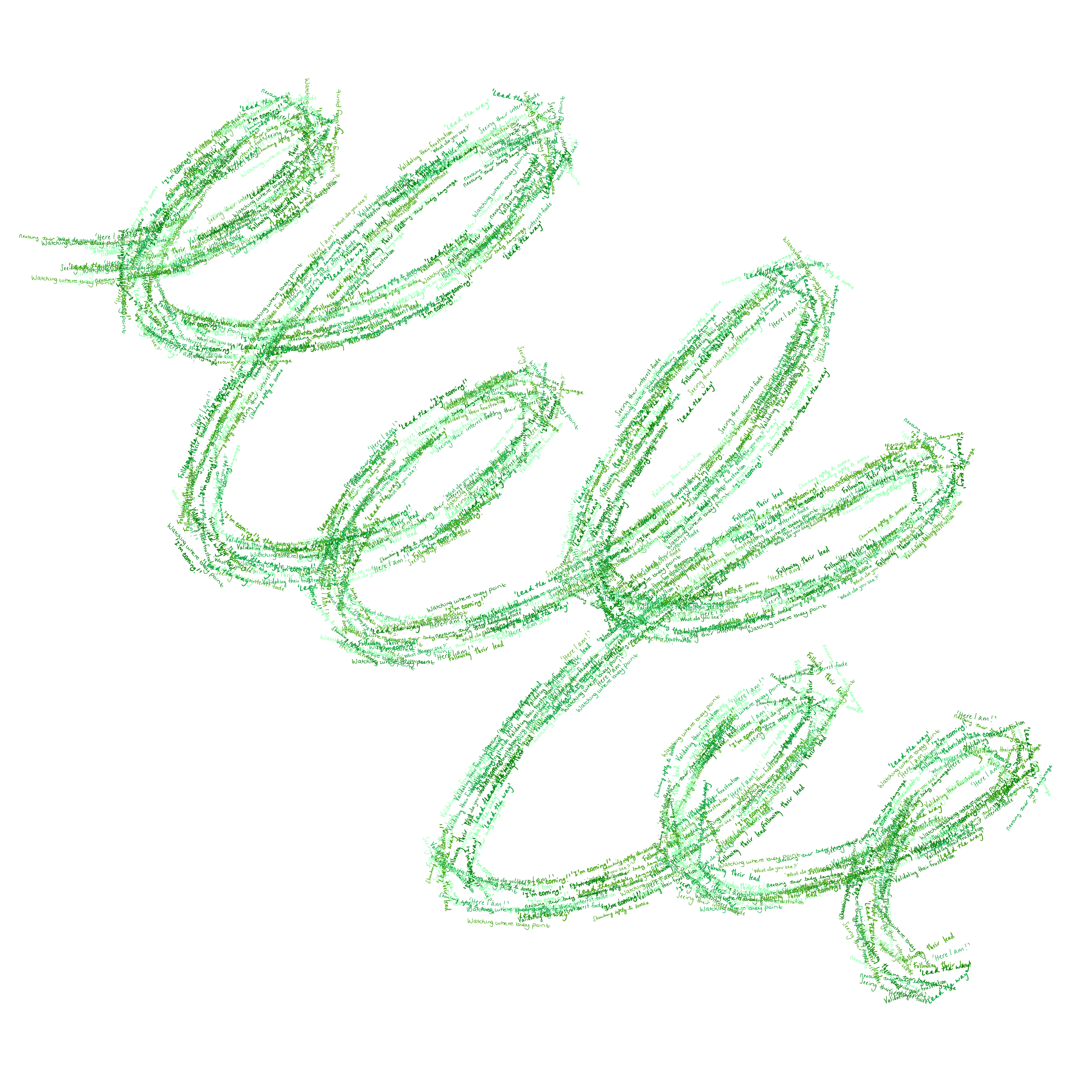
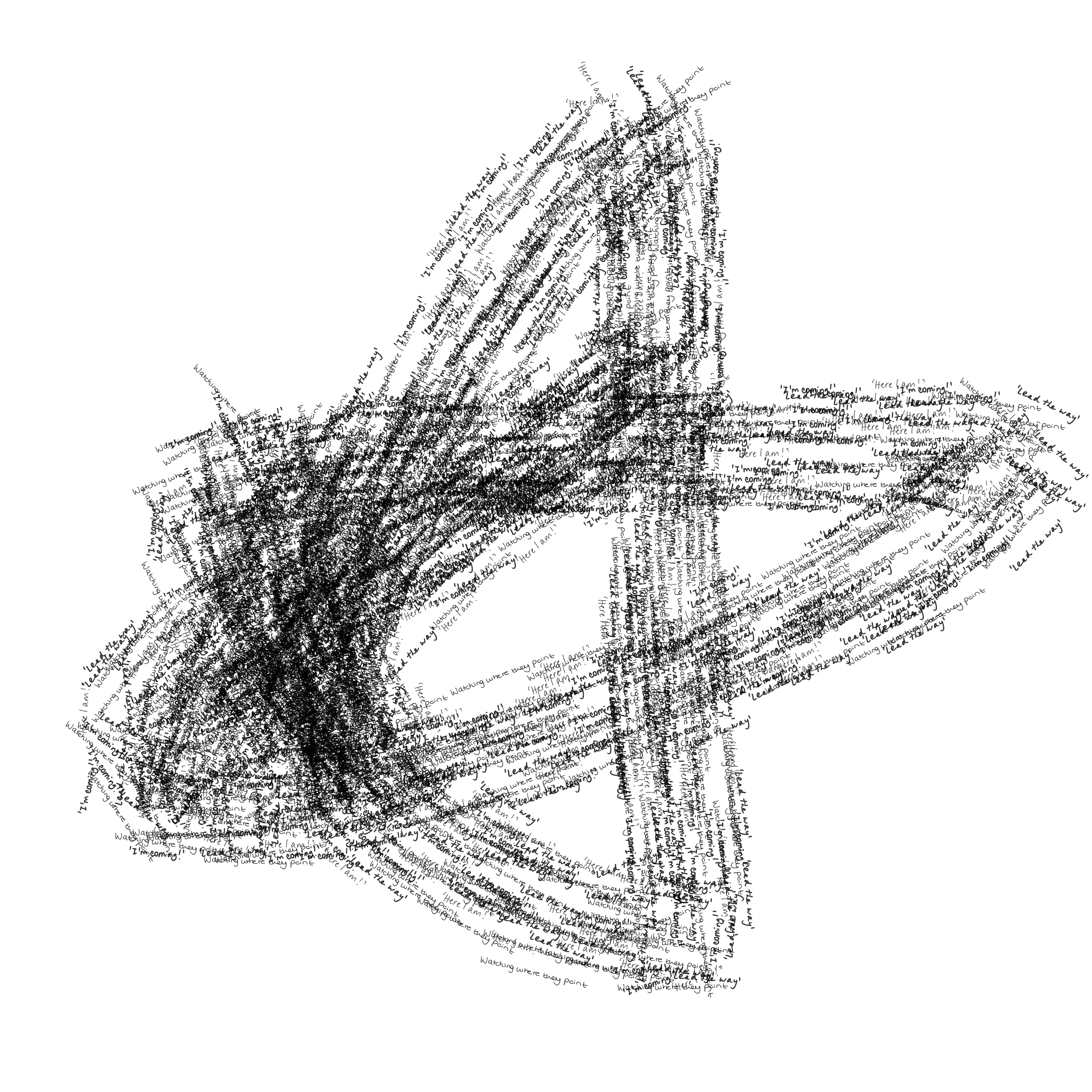
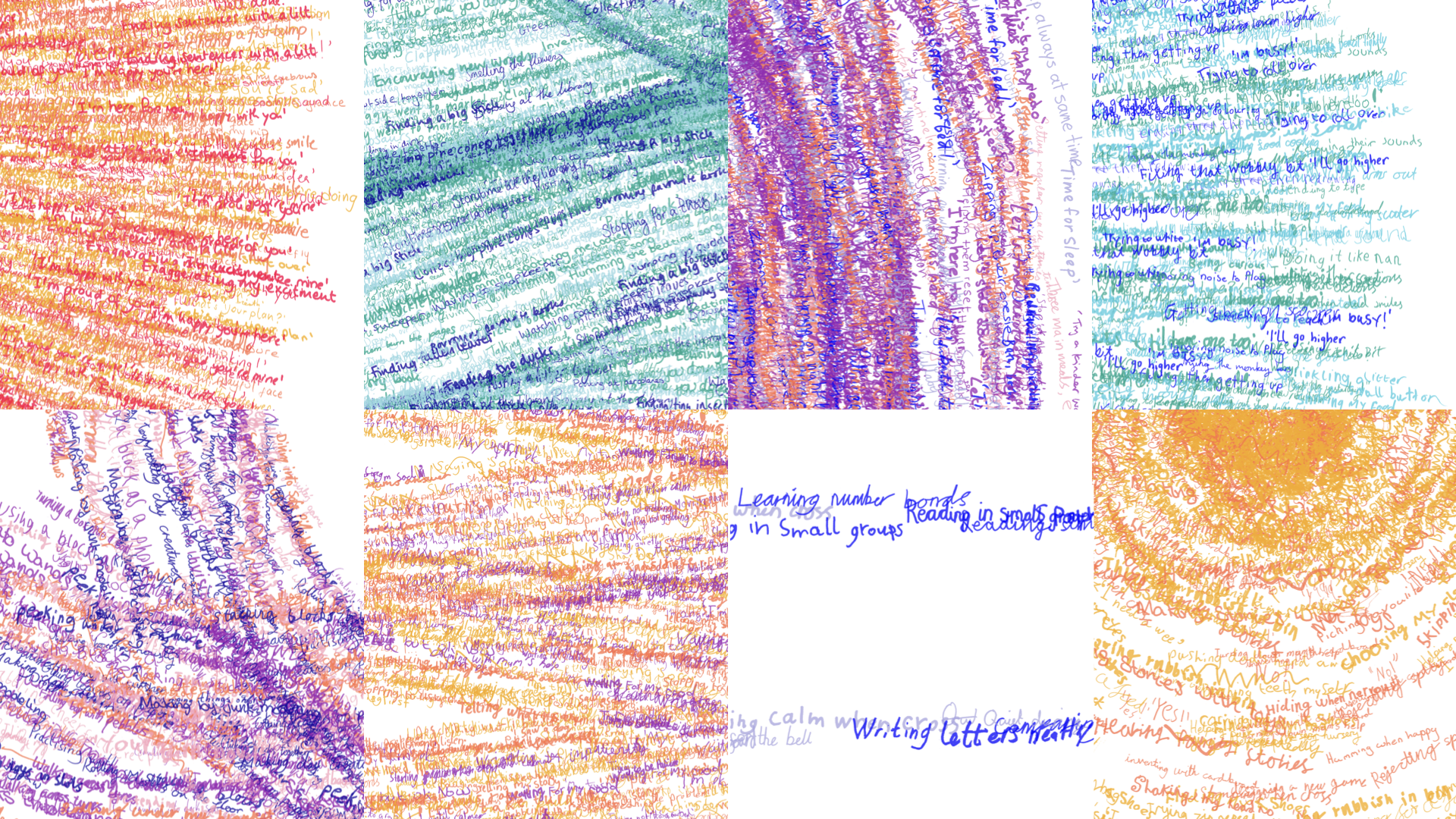
Using custom software written in p5.js, I layered thousands of these handwritten phrases into large-scale compositions. Rather than representing developmental outcomes, the works visualise the accumulation of developmental labour. Each composition was designed to evoke a different type of developmental labour, while the deliberately blurred appearance reflects the nature of early childhood itself: imperfect, repetitive and impossible to reduce to precise measurements. Thousands of individual moments merge together over time, forming the foundations of child development until, almost imperceptibly, a child becomes themselves over time.
The residency reshaped my understanding of the role of the artist within data practice. I realised that my role was not to visualise data, but to reveal the datasets that conventional measurement overlooks through creating them myself.
A parent’s work
Part of The missing mark-making series
Stefanie Posavec, 2026
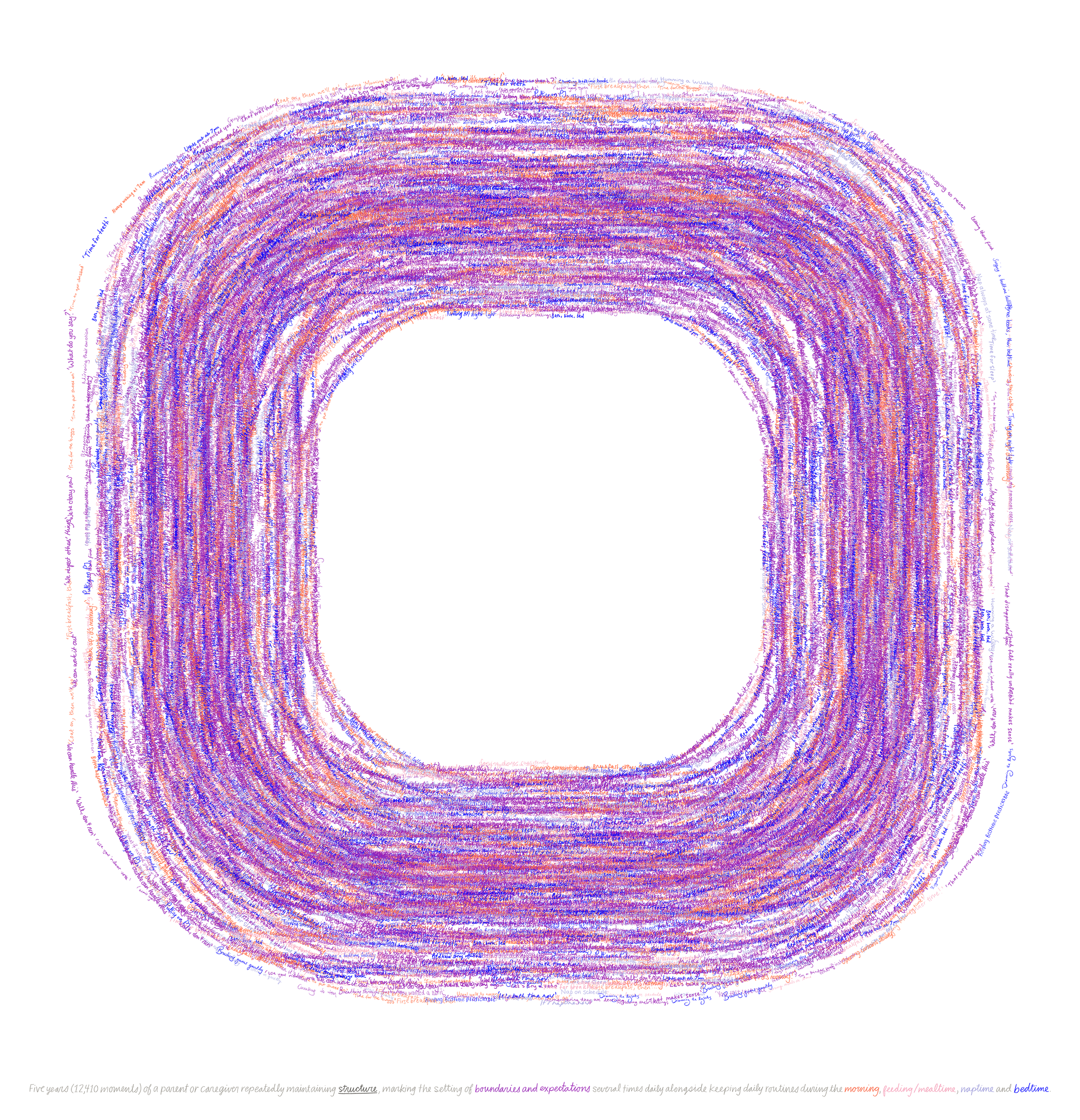
Sharing books and cuddles at bedtime. Wiping sticky faces. The fun of searching for the roundest stone in the park. Answering the question ‘why?’ for the hundredth time.
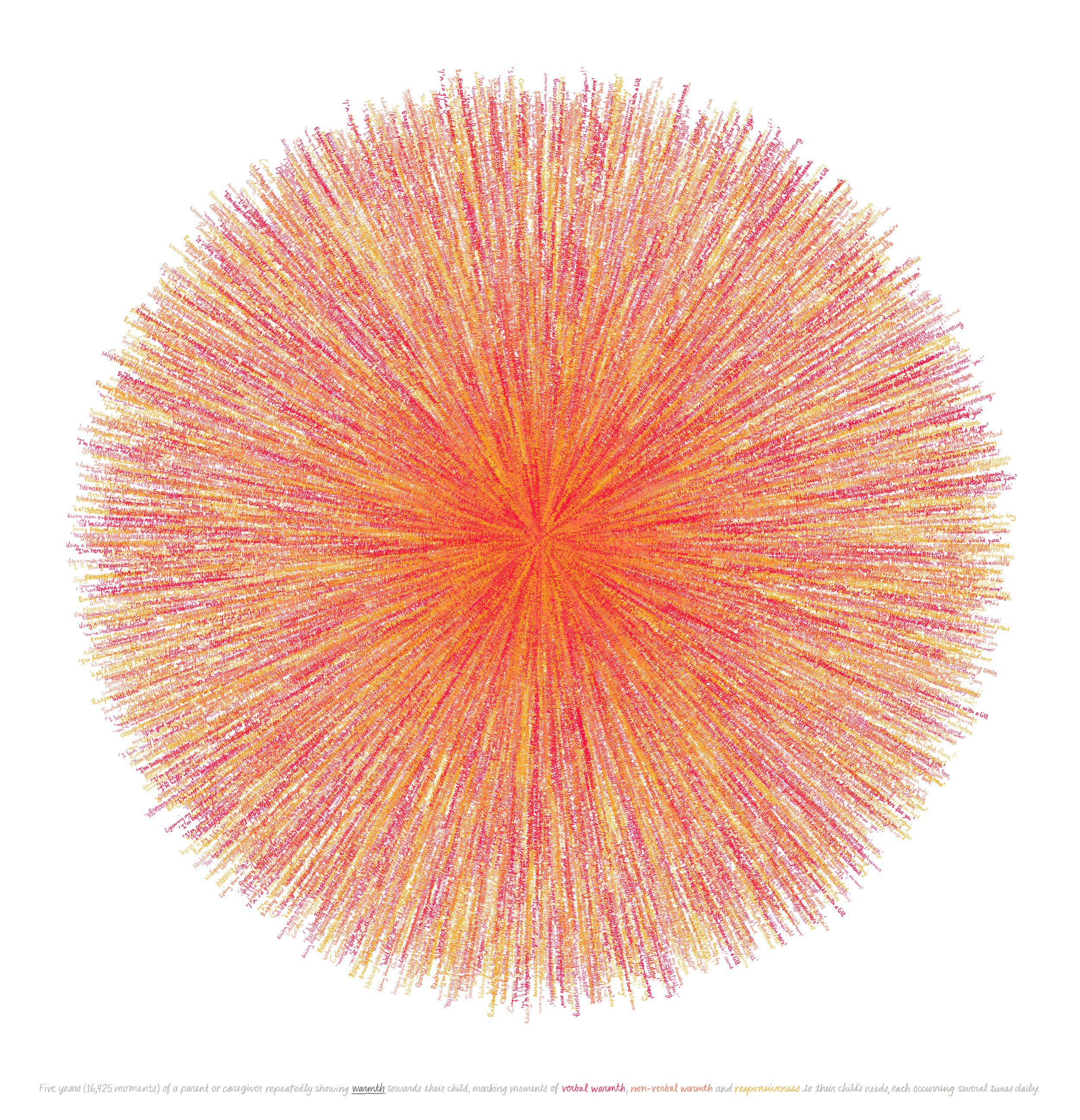
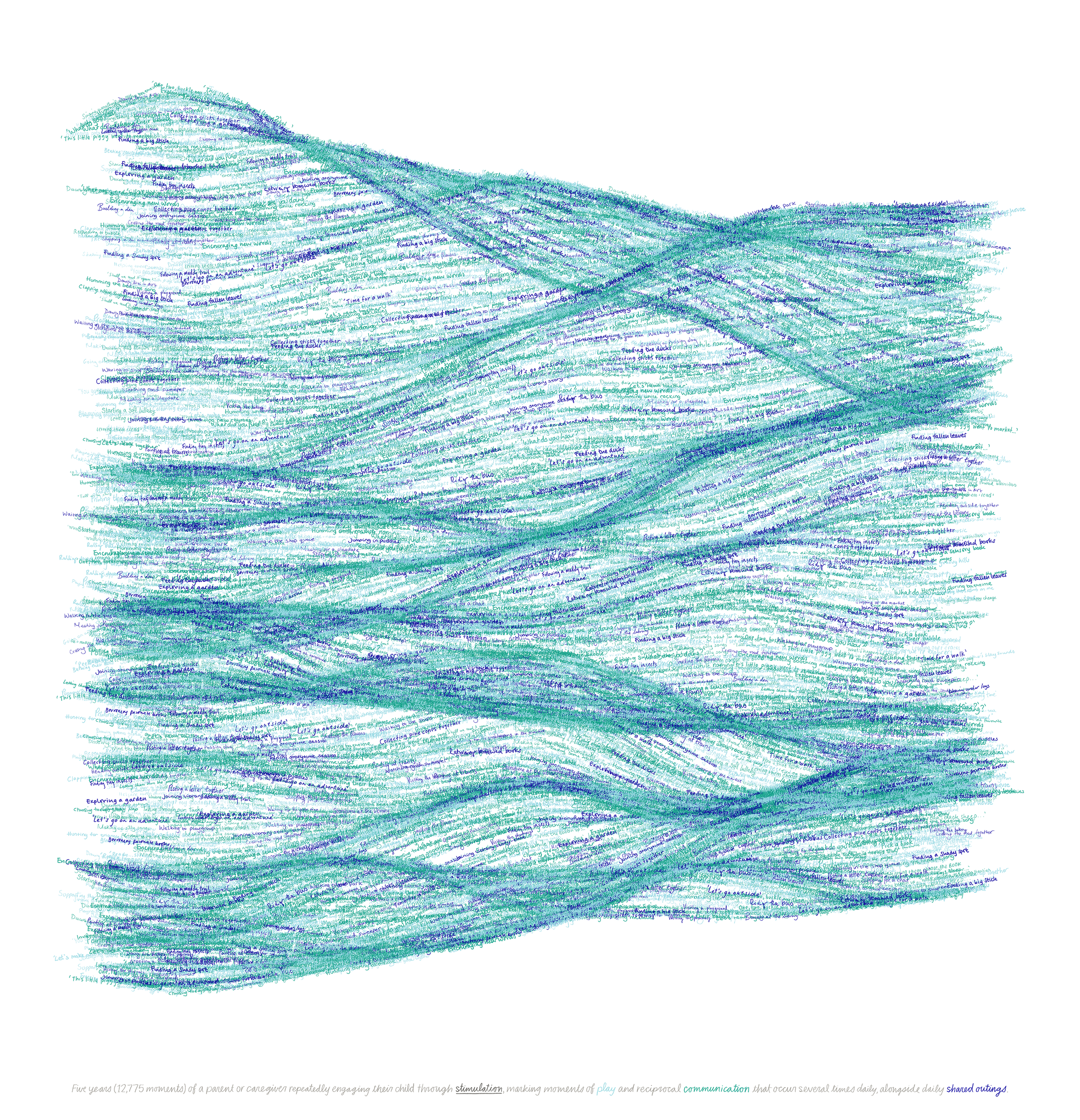
In this series, Stefanie Posavec celebrates the repetitive and patient acts of parenting: the care, effort and attention that shape a child from the earliest years. Giving warmth, ensuring structure through boundaries and routines, and providing stimulation through play and learning opportunities, these important elements help a child thrive.
Featuring handwritten phrases from parents and caregivers marking everyday interactions over the first five years of a child’s life, these artworks show how these tiny but important moments layer and repeat, forming the foundations of child development.
A child’s work
Part of The missing mark-making series
Stefanie Posavec, 2026
Growing up is active and intensive.
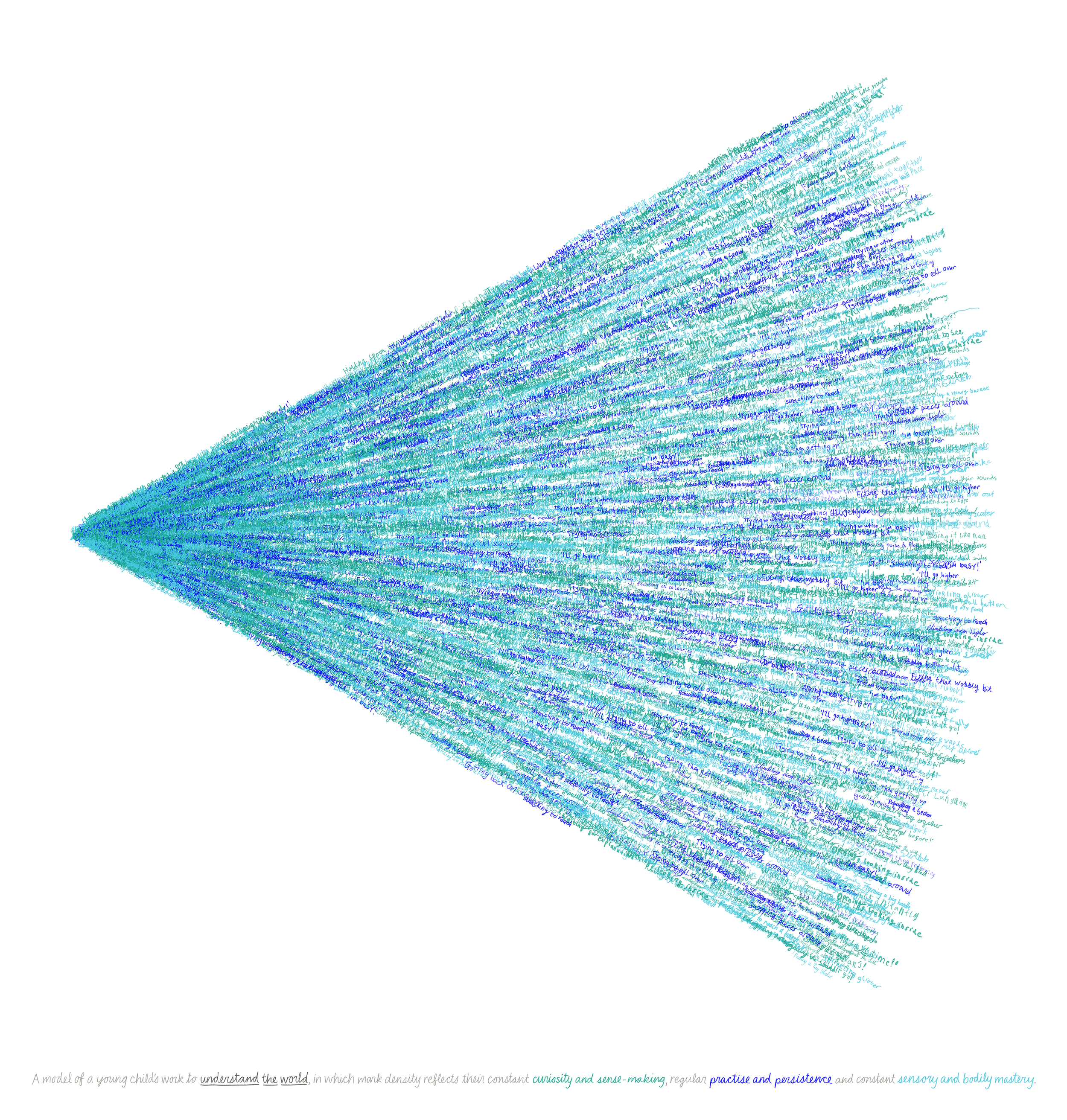
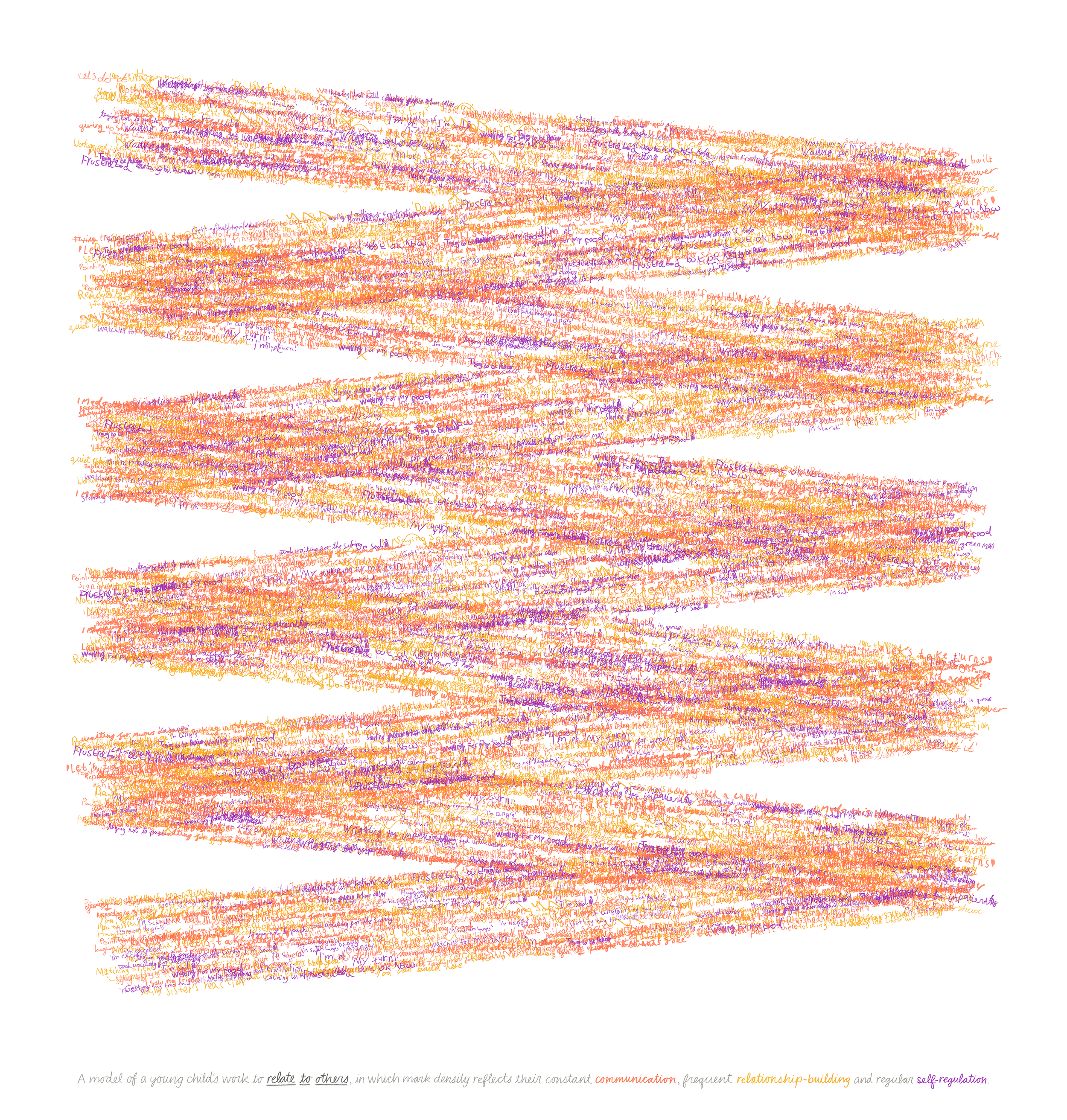
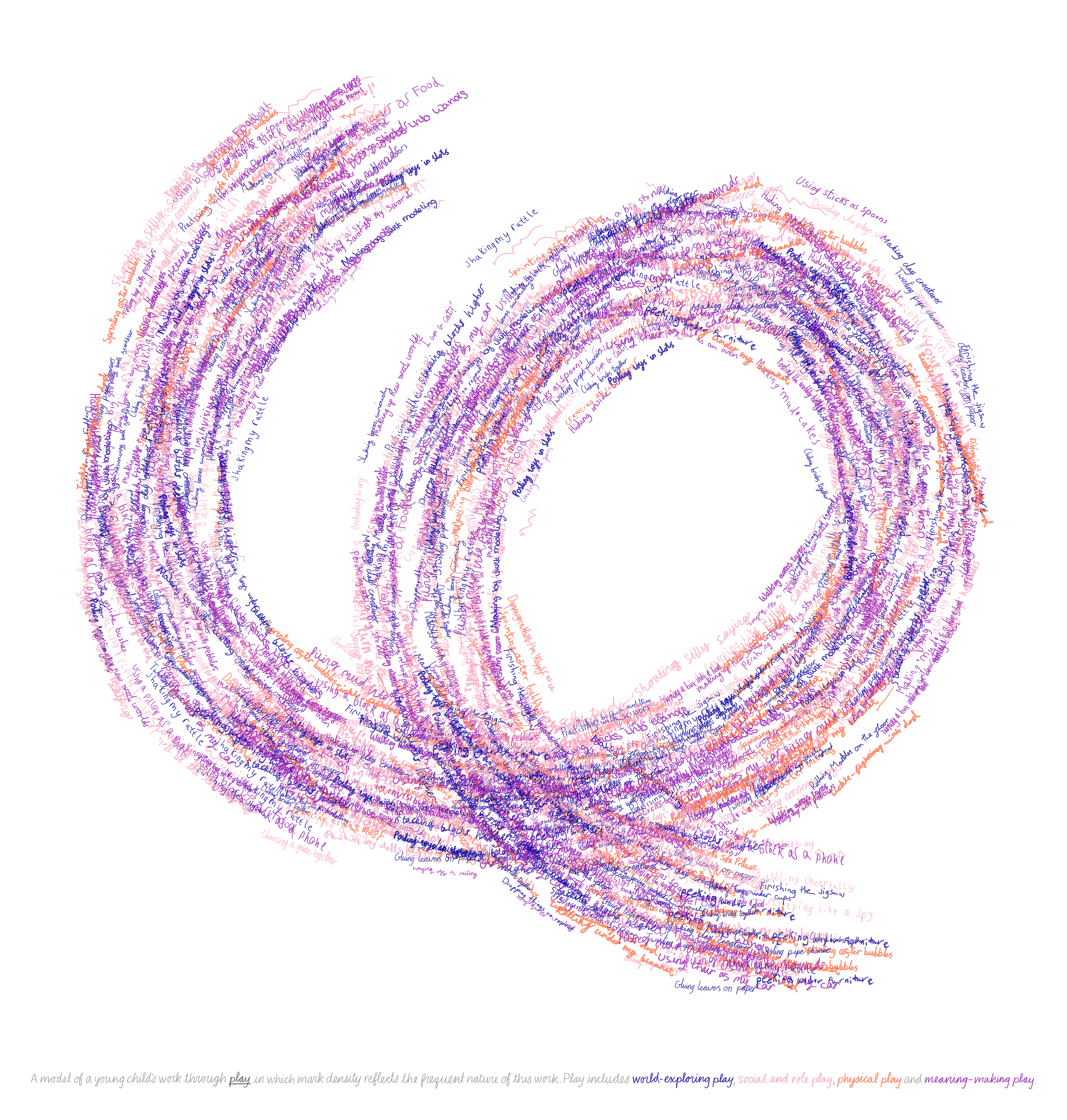
This series celebrates the ‘work’ of early childhood from the perspective of a child. Drawing on frameworks developed by early years experts, the artworks break down a child's development into everyday moments that overlay and accumulate as they learn about the world, play, relate to others, build their identity and adapt to school.
The series references artistic mark-making by layering the marks and writing of children aged 1-10 years old to create forms that describe this work. Against a backdrop of warm and responsive caregiving explored in Stefanie’s A parent’s work series, the artworks visualise how a child’s perseverance, play and repeated efforts form the building blocks of each developmental milestone.
Understanding the world
Relating to others
Play
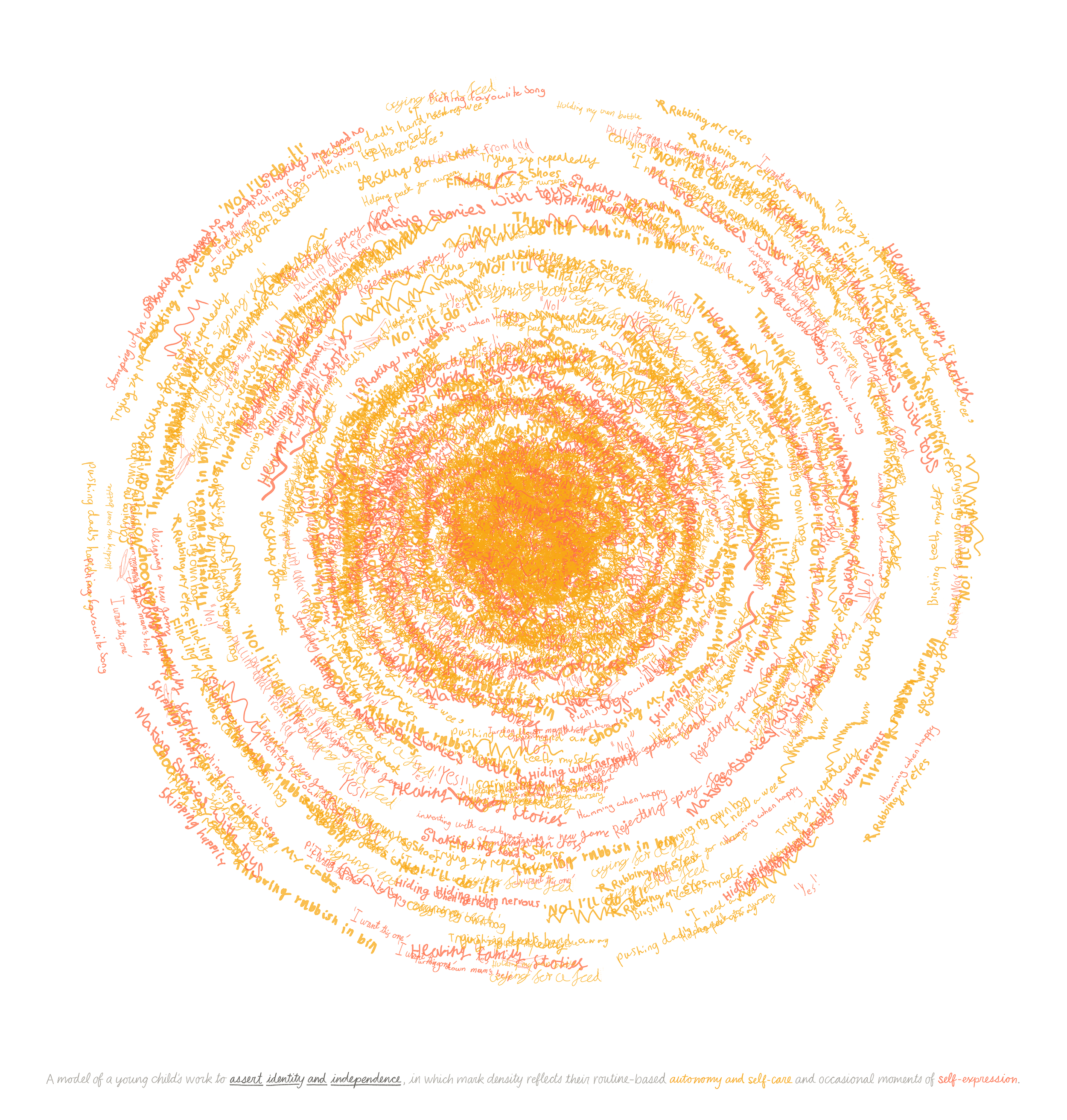
Asserting identity and independence
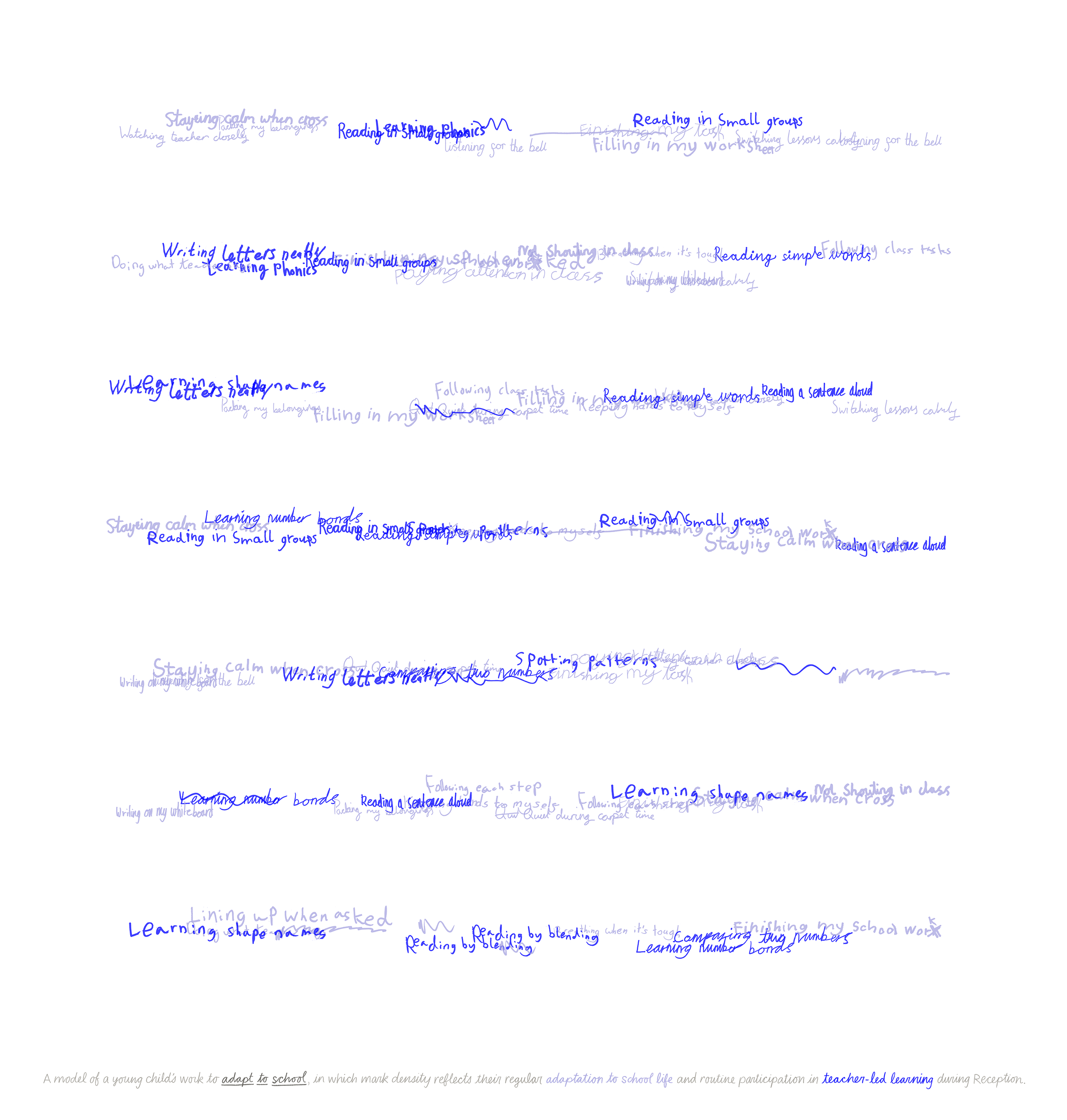
Adapting to school